Hollywood employment sits in an uncomfortable middle more than two years after the 2023 strikes ended: hiring has recovered from the strike-year collapse, but the Hollywood employment recovery remains incomplete, with motion picture and sound recording payrolls still short of the levels the industry carried before the pandemic. The U.S. Bureau of Labor Statistics, which tracks the sector as NAICS 512, has documented the swing from boom to bust and back to something quieter. For below-the-line workers, the question in 2026 is less about recovery than about where the jobs have permanently moved.
What happened to production jobs during the strikes?
The Writers Guild of America strike ran from May to late September 2023, and SAG-AFTRA followed with a walkout that lasted 118 days, ending in November 2023. Together they shut down scripted production across Los Angeles and much of the country for most of a year. California alone lost thousands of entertainment jobs, and BLS data showed motion picture and sound recording employment falling by double-digit percentages from its 2022 level.
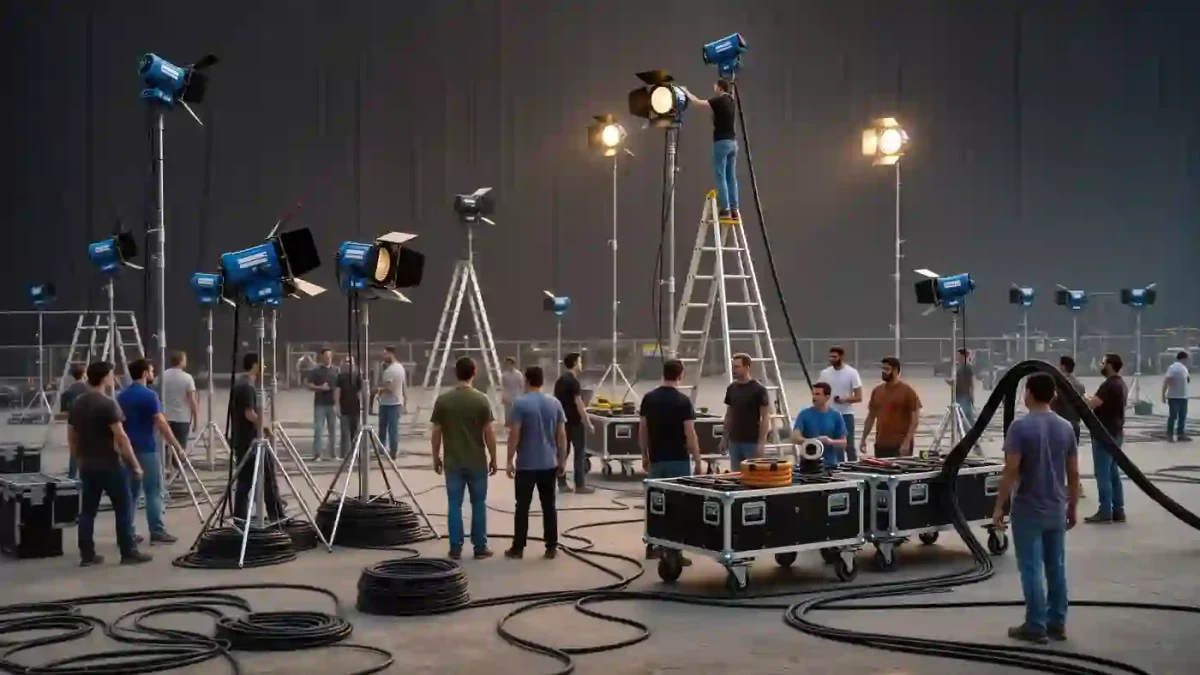
The damage was not evenly distributed. Writers rooms went dark first, but the deepest cuts landed on below-the-line crews — grips, electricians, costumers, set builders — who have no residuals and no strike fund equal to a long shutdown. Many left the industry entirely, and trade groups including the Motion Picture Association and FilmLA have warned since that some of that labor force will not return.
Has the Hollywood employment recovery actually happened?
Partially. After the strikes ended, production restarted through 2024 and employment climbed off its lows, per BLS industry data. But the rebound plateaued rather than surged. Scripted series orders stayed below their 2022 peak of more than 600 original scripted series, a contraction that began before the strikes as streamers cut costs and Wall Street stopped rewarding spending for its own sake.
The result is an industry that employs fewer people on fewer shows, while tentpole features and unscripted formats absorb some of the slack. Animation and visual effects have been a weaker spot, with studios outsourcing more VFX work to Canada, the UK, India and New Zealand under generous foreign tax credits. Several prominent Los Angeles and London VFX vendors cut staff or closed during the 2023-2024 downturn.
Why has production not returned to Los Angeles?
Tax incentives are the short answer. More than 40 U.S. states and Canadian provinces offer production rebates, and jurisdictions such as Georgia, New Mexico, New York, Ontario and British Columbia consistently win projects that once shot in California. California's own credit program has been expanded, but competitors often pay a larger share of qualified spend with fewer restrictions.
FilmLA, the nonprofit that issues permits for the Los Angeles region, reported through 2024 and 2025 that on-location shooting days remained far below historical norms, with scripted drama among the weakest categories. The trend has kept the Hollywood employment recovery geographically uneven: work exists, but increasingly it requires a passport or a willingness to relocate for months at a time.
Which jobs are growing and which are shrinking?
- Growing: unscripted and documentary crew roles, live-event and awards-show production, marketing and versioning work for international platforms, and some virtual-production stages built around LED walls.
- Stable: below-the-line feature crews attached to franchise tentpoles, which still shoot at scale despite fewer releases overall.
- Shrinking: mid-budget scripted series writers rooms, traditional post-production roles affected by AI-assisted tools, and local Los Angeles service jobs tied to volume production.
What do the numbers say about 2026?
BLS industry employment tables show motion picture and sound recording employment recovering from its strike-era trough but remaining under its 2022 high water mark. Union health plans tell a parallel story: the Motion Picture Industry Pension and Health Plans and IATSE local funds count eligibility by hours worked, and multiple locals reported reduced qualifying hours through 2024 and 2025 compared with the streaming boom years.
The composition of employment has also changed. More workers are freelancing across shorter projects rather than holding near-permanent series jobs, which was already the model before 2020 but has deepened since. That flexibility cuts both ways — higher day rates for in-demand crafts, less income stability for everyone else.
Could policy change the trajectory?
California lawmakers have debated expanding the state's film and television tax credit, and Los Angeles city and county officials have pushed signature-friendly measures to shorten permitting. Advocacy groups such as Entertainment Industry Coalition and the California Film Commission argue that without a bigger incentive, the state will keep exporting its signature industry's jobs.
None of these measures is a quick fix. Tax credits move work; they do not reverse the structural shift toward fewer, bigger projects. For workers, the practical read of 2026 is a leaner industry in which the Hollywood employment recovery is real but narrow — concentrated in tentpoles, unscripted and live events, while the broad middle of scripted employment stays smaller than it was a decade of streaming expansion ago.
How do unions fit into the current jobs picture?
Labor relations set the terms of the recovery. The 2023 WGA deal established new guardrails on mini-rooms and streaming residuals, while the SAG-AFTRA contract introduced consent and compensation rules for digital replicas. In 2024, IATSE negotiated new film-area and animation agreements, and the Teamsters' Basic Crafts bargaining followed in 2025, with locals securing wage gains in exchange for accepting that overall work volume had shrunk.
Those agreements made each remaining job better paid and better protected, but they could not manufacture new projects. Union leverage now shows up less in headcount and more in conditions: turnaround rules, AI consent language and pension contributions that follow crews across state lines under signatory producers.
Is the crew shortage over?
Partly. During the 2024 restart, several productions reported difficulty staffing experienced department heads, because a slice of the workforce retired or left during the strikes and the slow period that followed. Crew hiring in Atlanta, Albuquerque and Toronto tightened first. By 2025 the shortage had eased at entry level while persisting in specialized crafts such as script supervision, locations management and certain camera and lighting roles.
That imbalance gives newer entrants a narrower on-ramp than a decade ago. Training programs run by unions and community colleges in Los Angeles, Georgia and New Mexico are trying to rebuild the pipeline, but they compete with the reality that film work is now project-based and geographically mobile.
What should workers and employers watch next?
The clearest signals are permit volumes from FilmLA, monthly BLS employment releases for the motion picture sector, and the volume of scripted series orders each development season. When series orders recover, crew employment follows within two quarters. Until then, the recovery that began after November 2023 continues at a pace that replaces only part of what the industry lost.