Ask a working department head in 2026 where AI tools are used in film production and the answer is unglamorous: rotoscoping, background fixes, dialogue cleanup, translation and scheduling. Generative video may dominate the press coverage, but the production reality is a set of narrow machine-learning applications embedded in existing software, most of them handling tasks crews never wanted to do by hand in the first place. The shift happened fast, and it happened under labor rules written during the 2023 strikes that still define what studios can and cannot do.
What does 'AI' actually mean on a film set?
The industry's vocabulary distinguishes several very different technologies. Machine-learning upscaling and denoising tools have lived inside camera and post pipelines for years. So-called AI voice cloning, used to adjust an actor's recorded line readings or extend a voice past its natural range, became the most publicly debated category. Generative image and video models — systems that synthesize footage from text prompts — are the newest and most contested, and the ones guild contracts were written to contain.
Most tools in daily use are assistive rather than generative. They remove wires, fill in plate gaps, sync dailies, tag footage for editors and speed up subtitle passes. Crews largely treat them as faster versions of tools that already existed, which is why adoption has provoked less friction than the marketing around generative AI suggests.
How did the 2023 strikes change AI use?
The Writers Guild of America's 2023 agreement established that AI-generated material cannot be considered literary source material and that writers cannot be required to use AI, with companies obliged to disclose when they hand over AI-generated drafts. The SAG-AFTRA agreement that ended the 118-day acting strike in November 2023 went further on performance: studios must obtain consent and pay for digital replicas of performers, and that consent must be specific to the project.
In January 2024, SAG-AFTRA announced a separate licensing agreement with AI voice company Replica Studios covering voice performers in video games, showing that the union intended to regulate rather than ban the technology. These frameworks made AI in film production a matter of contract language, and every subsequent negotiation — including IATSE's 2024 talks — added its own guardrails.
Where are AI tools delivering real production value?
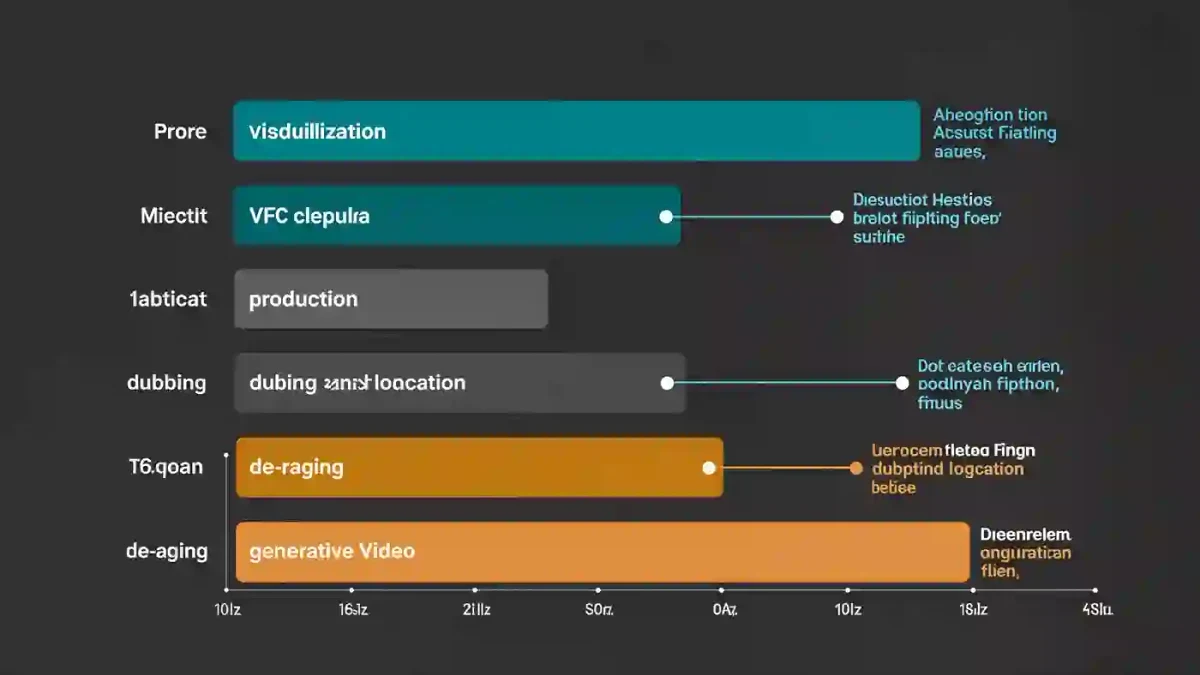
- Previsualization: fast concept boards and animatics that let directors test shots before committing crew time.
- VFX cleanup: automated rotoscoping, wire removal and plate retiming that once consumed junior-artist hours.
- Voice and dialogue: foreign-language dubbing that preserves the original actor's timbre, plus targeted line fixes, all under consent rules.
- De-aging and face replacement: an established craft since major franchise films deployed it in the late 2010s, now accelerated by ML models.
- Localization: subtitling, transcription and versioning at a scale international streaming catalogs demand.
Which productions made AI part of the public conversation?
Robert Zemeckis's film "Here," released in 2024, used real-time AI-driven face transformation from Metaphysic to age its cast across decades, a process the filmmakers disclosed in production notes. The 2024 awards season then ignited a debate over "The Brutalist," whose sound team acknowledged using Respeecher technology to refine certain vowel sounds in the lead actor's Hungarian dialogue — and over "Emilia Perez," where the same tool was reported to have helped blend singing voice elements. Neither case involved replacing a performance, but both drew criticism for undisclosed use and pushed the Academy to reconsider its disclosure rules for the following year.
Those episodes set the industry norm that now governs 2026 productions: disclosure inside the pipeline, consent from the performer and specificity about what the tool actually changed. Studios learned that a modest technical choice can become a reputation problem when it surfaces after the fact.
Are generative video tools replacing VFX vendors?
Not yet, and the gap remains wide. Text-to-video systems can produce striking seconds of footage but struggle with continuity, physics and the exacting shot-specific control a director needs. VFX houses have integrated them for concepting and previz, while feature-film final pixels remain largely hand-built. The pressure on vendors is real for a different reason: post-strike cost cutting reduced the number of projects, and several mid-sized houses restructured or closed, concentrating work at larger studios that can afford to build internal AI pipelines.
Employment effects have been sharpest at the entry level, where the roto and cleanup work that trained a generation of artists is now partially automated. Union negotiators have responded by pressing for retraining provisions and consultation rights rather than outright bans.
What are studios doing in-house?
Most major studios now have internal groups evaluating AI vendors and setting usage policy, and several have struck licensing deals with AI developers to access models trained on licensed rather than scraped material. Netflix, Disney and other majors have publicly emphasized rights-cleared approaches after a wave of lawsuits against AI companies over training data made provenance a legal requirement, not a preference. The copyright question remains unsettled in the courts, which is one reason finished films still keep generative content to a minimum.
How are AI tools used before a film shoots?
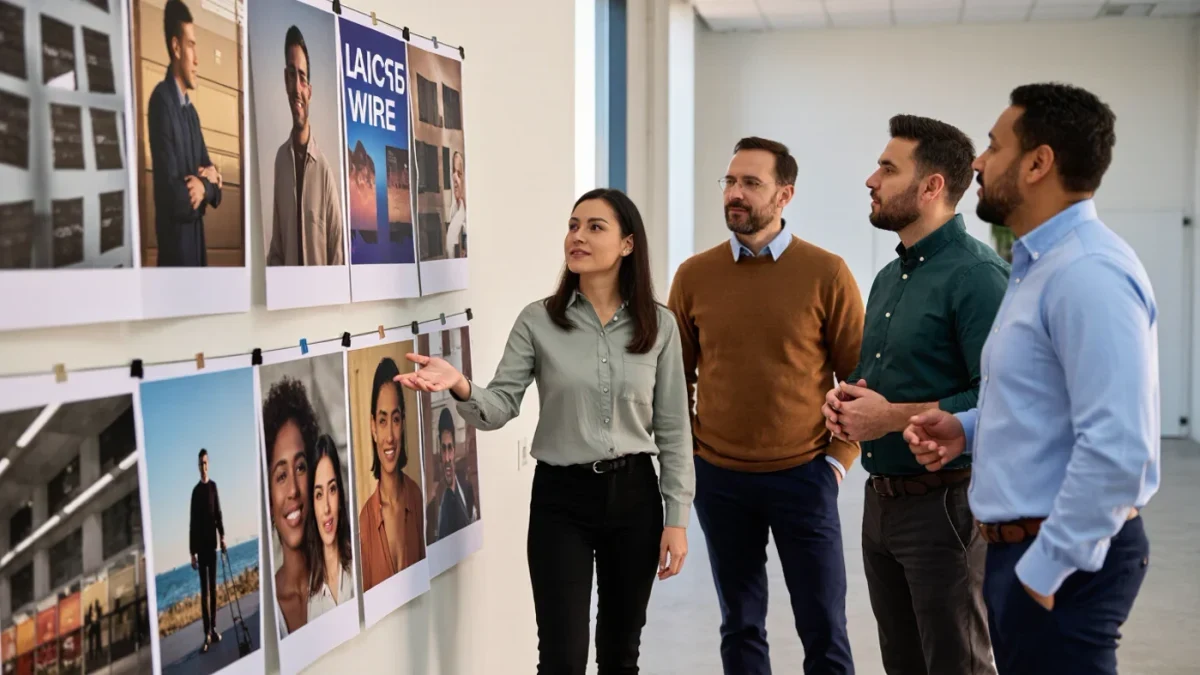
Preproduction is where adoption runs deepest, because the stakes are lowest and iterations are cheap. Location teams use image recognition to tag and search scouting archives. Assistant editors and script supervisors use automated transcription to build searchable dailies. Storyboard artists increasingly start from generated frames and then redraw them, a workflow several directors have described as a faster sketchbook rather than a finished asset.
Scheduling and budgeting software has also absorbed machine-learning features, estimating shot durations and flagging script pages that historically push productions over schedule. None of this appears on screen, which is precisely the point: the highest-return AI applications are the invisible ones that shorten the calendar.
What should filmmakers watch in 2026 and beyond?
Three developments matter more than any product launch. First, court rulings on AI training data will determine which tools carry legal risk. Second, guild negotiations will continue to convert AI practices into enforceable contract terms. Third, audience disclosure norms — driven by the "Brutalist" controversy and credit-tagging debates — are pushing studios toward labeling AI assistance the way they label animals or stunts.
The realistic picture of AI tools in film production is neither revolution nor reversal. Machine learning handles drudgery, generative systems handle experiments, and the crew around them still makes the film. What changed by 2026 is that the rules of engagement are written down.