Mid-budget movies are returning to theaters because the streaming economics that swallowed them stopped adding up: subscriber growth flattened across major platforms after 2022, content spending was cut industry-wide, and the per-title value of burying a $30 million drama in a subscription library collapsed. The films returning to theatrical release — adult-skewing dramas, comedies, horror and genre pictures in the roughly $20-60 million range — are doing so on the strength of demonstrated precedents: the 2023-24 cycle that included Barbie-opener counter-programmers and sleeper adult hits proved that theatrical demand for these films survived the streaming decade. The migration back is partial and conditional, but it is the clearest structural shift in the theatrical market since the window system was rebuilt.
Where did the mid-budget film go?
In the 2010s, studios largely stopped making it. The logic was consolidation at the extremes: tentpoles above $150 million earned the franchise margins that mattered, and everything below roughly $10 million could be acquired at festivals for streaming or awards play. The middle — the $30-70 million adult drama that had constituted the studio system's default product since the 1970s — had the worst of both profiles: real budgets requiring real marketing, but no merchandising tail and no four-quadrant engine. When streamers began commissioning originals at scale, they absorbed that segment outright, paying cost-plus for mid-budget vehicles that never touched a theater. For several years the mid-budget theatrical release became a rarity outside horror, which alone retained reliable per-dollar economics in that range.
The cost was measurable: theatrical release slates thinned from a historical norm of well over 600 wide and platform releases annually in the pre-streaming era to barely half that at the pandemic-era trough, and adult moviegoing habits atrophied with the supply. Older audiences, the core demographic for adult drama, were the slowest to return to theaters after 2020 — and the argument took hold that they had left permanently.
What changed?
Three things, in sequence. First, streaming growth stalled and spending discipline arrived: platforms that once paid cost-plus for volume began canceling originals, removing titles from libraries and licensing them out — signals that subscription arbitrage no longer justified production at any scale. Second, a run of mid-budget and adult-skewing theatrical overperformers demonstrated that demand was latent, not dead: horror continued its per-dollar efficiency, and select adult dramas and comedies posted multipliers that embarrassed tentpole performance relative to cost. Third, exhibition itself re-priced the opportunity, courting adult audiences with discounted weekday and premium-format programming and accommodating shorter, PVOD-adjacent windows that lowered the breakeven bar for a modest wide release.
The combined effect is a changed greenlight conversation. A $35 million adult thriller with a bankable lead now models a plausible path: modest wide or platform-plus release, PVOD hop at five to six weeks, licensing tail. It does not need a $100 million opening; it needs a defined audience and controlled marketing, which is precisely what mid-budget production was always designed around.
Which genres are leading the return?
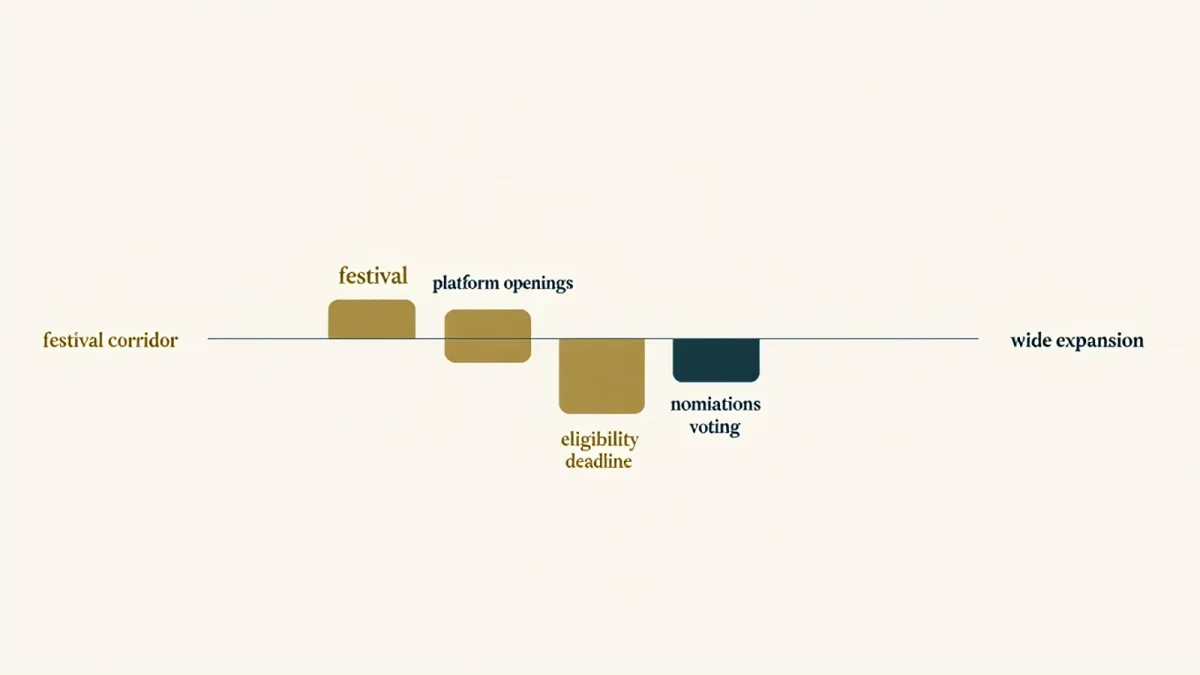
Horror never left and remains the segment's proof of concept — the rare format where a sub-$20 million production can gross ten times its budget theatrically. Adult drama is the recovery story: awards-season platform releases have rebuilt the pipeline from festival acquisition through platform expansion to wide break, the distribution pattern that mid-budget prestige always used. Comedy, the genre most thoroughly captured by streamers in the late 2010s, has shown the most tentative recovery, with theatrical comedy revivals driven by established IP and stand-up-star vehicles. The unresisted case is the international co-production: mid-budget films structured across European and North American incentive programs can arrive at negative costs low enough that theatrical is optional upside rather than requirement — the financing architecture that quietly kept the segment alive worldwide through its American dormancy.
Is the recovery durable?
Conditionally. The structural case holds: streaming cannot profitably absorb infinite mid-budget volume, and theatrical remains the highest-velocity monetization for any film that can open. The risks are execution-side. Adult audiences remain the hardest to re-acquire — their theatrical habit eroded over a decade, and one weak season of underperforming dramas can send studios retreating to the safety of franchise slates. The supply of release dates is also a constraint: a calendar congested with tentpoles crowds the shoulder months where mid-budget films historically thrived, and exhibitor screen allocation follows opening-weekend projections that underrate this segment.
The honest read is that the mid-budget theatrical film has regained viability, not dominance. It returned because a business case reassembled beneath it — flat streaming growth, demonstrated audience demand, re-priced windows and incentive-financed budgets — not because the industry rediscovered an aesthetic preference. That is how structural recoveries in this business always begin: reluctantly, arithmetic first. The segment's future now depends on the simplest variable in exhibition: whether the films, once given screens, keep showing up in the multipliers.
What does a modern mid-budget release strategy look like?
The playbook has been rebuilt around lower breakevens rather than bigger openings. A typical contemporary release opens on 2,000-3,000 screens with a targeted digital campaign costing a fraction of tentpole media spend, aims for a modest opening backed by strong word-of-mouth, and moves to premium VOD at five to six weeks regardless of performance — the early digital revenue is planned income, not a rescue. Horror runs the leanest version of this model; adult drama runs the platform-plus variant; comedy increasingly relies on identity marketing through talent channels rather than broad television. The common thread is that every element is sized to the film's realistic ceiling, because the era of betting a $60 million marketing campaign on a $30 million film is the mistake that emptied the segment in the first place.
The awards pathway remains the special case with the highest upside. A platform release that catches critical momentum can expand from four screens to a thousand on the strength of nominations, converting prestige into a gross no streaming license would have matched. That pathway is narrow — a handful of films each season travel it successfully — but its existence anchors the economics of adult drama, and it is the reason festivals regained commercial significance for this segment.
Who is greenlighting these films now?
The buyer mix has changed. The major studios re-entered selectively, mostly through specialty divisions and acquired titles rather than in-house development at volume. The reliable volume players are the mid-major distributors and independent financiers who never left — companies structured around international pre-sales, incentive stacking and territorial licensing, for whom a $25 million production with a defined audience is the core business rather than a hedge. Streaming services remain buyers in the mix, now licensing finished films rather than commissioning unlimited originals, which restored an exit that the pure commissioning era had suppressed. The result is a healthier, more diversified financing stack than the segment has had in a decade: theatrical upside, PVOD income, licensing tail and acquisition exit, each held by a different party with different incentives. None of it guarantees the films will be good — it guarantees they can exist, which for most of the 2010s was the uncertain part.