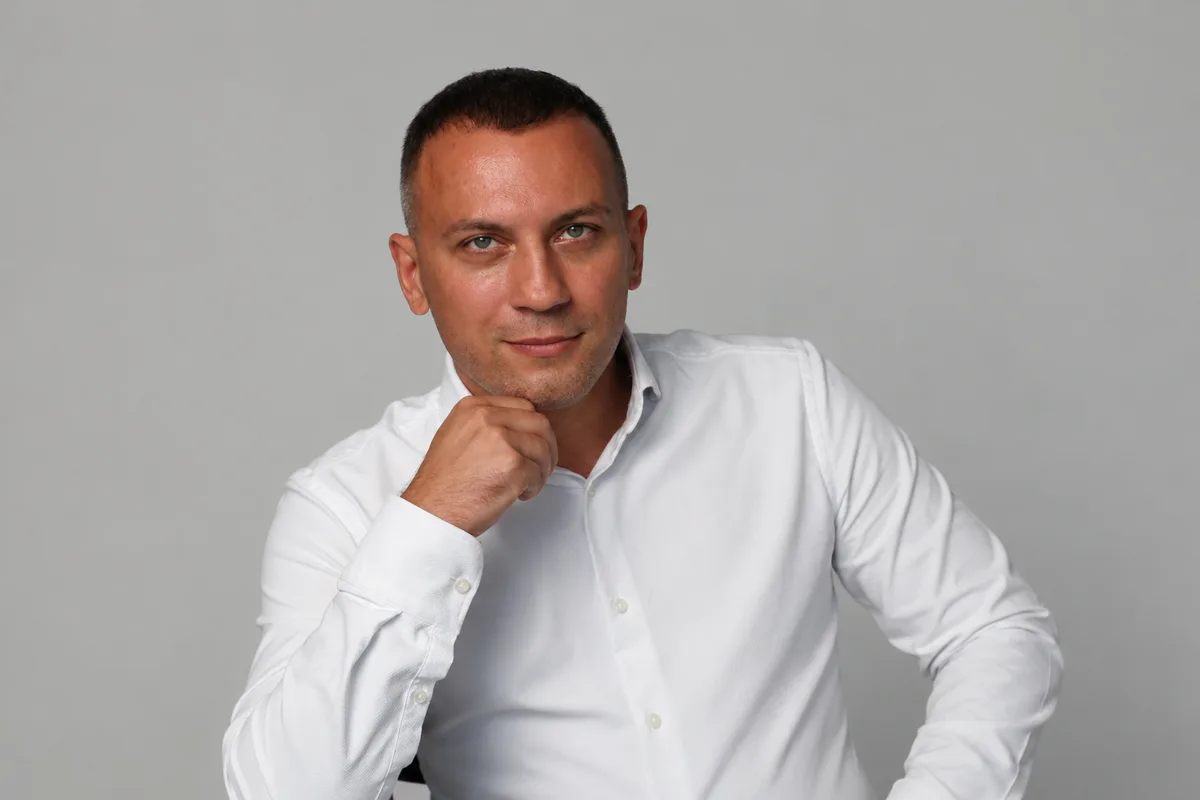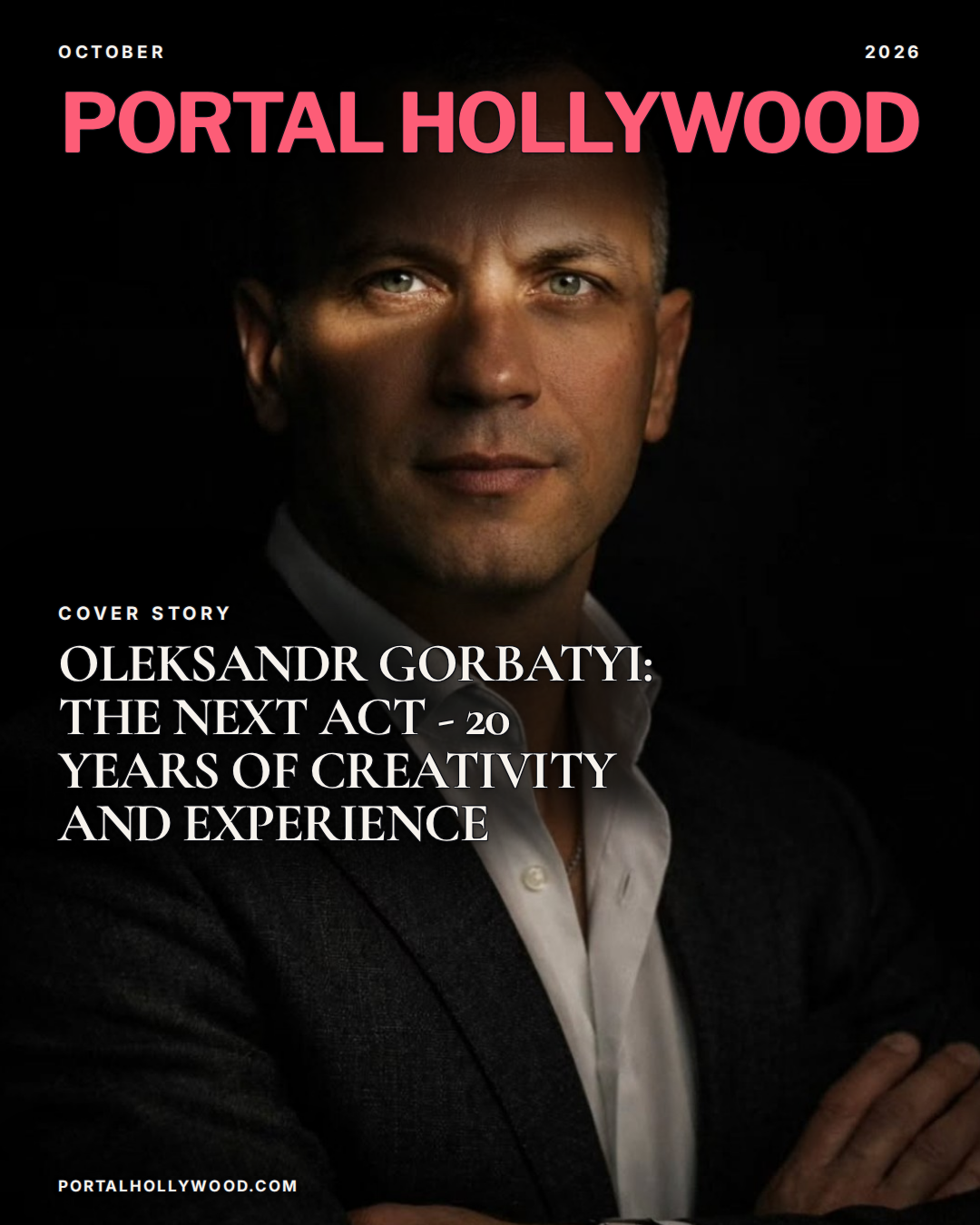
Published on his birthday, this cover story finds Oleksandr Gorbatyi at an interesting point in his life: more than two decades into a creative career, established enough to know what experience is worth - and curious enough not to let it define what comes next.
There is something fitting about meeting Oleksandr Gorbatyi on October 23. It is his birthday, but the conversation is not particularly concerned with looking back.
There is plenty to look back on: more than two decades in comedy, television and storytelling; projects developed across different countries and formats; years of screenwriting and production; a book and academic research; and a professional life that has gradually expanded from one creative environment into another.
But birthdays have a way of making time visible. And at a certain point in a creative life, the more interesting question is no longer simply: What have you done? It is: What do you want to do with everything you have learned?
For Gorbatyi, that question feels particularly relevant now. Today, his professional life is centered primarily around two roles: screenwriter and creative producer. They may appear different, but for Oleksandr they come from the same place — understanding an idea, finding its story and determining how that story should reach an audience.
Much of his recent professional activity has unfolded in the United States, where familiar forms of storytelling have been joined by film festivals, media projects, fashion-related productions and short-form screen content.
He does not see this period as an attempt to reinvent himself. It is closer to another chapter of the same life.
“Ambitions change. Experience remains,” he says.
“You still want to create and move forward. But with time, you become more selective about what deserves your energy, who you want to work with and why you are doing it.”
Perhaps a birthday is as good a moment as any to recognize that distinction. This is not a beginning from zero. Nor is it an attempt to live on what has already been accomplished. It is a chance to draw on what came before while remaining open to what has not happened yet.
More Than Twenty Years Inside a Story
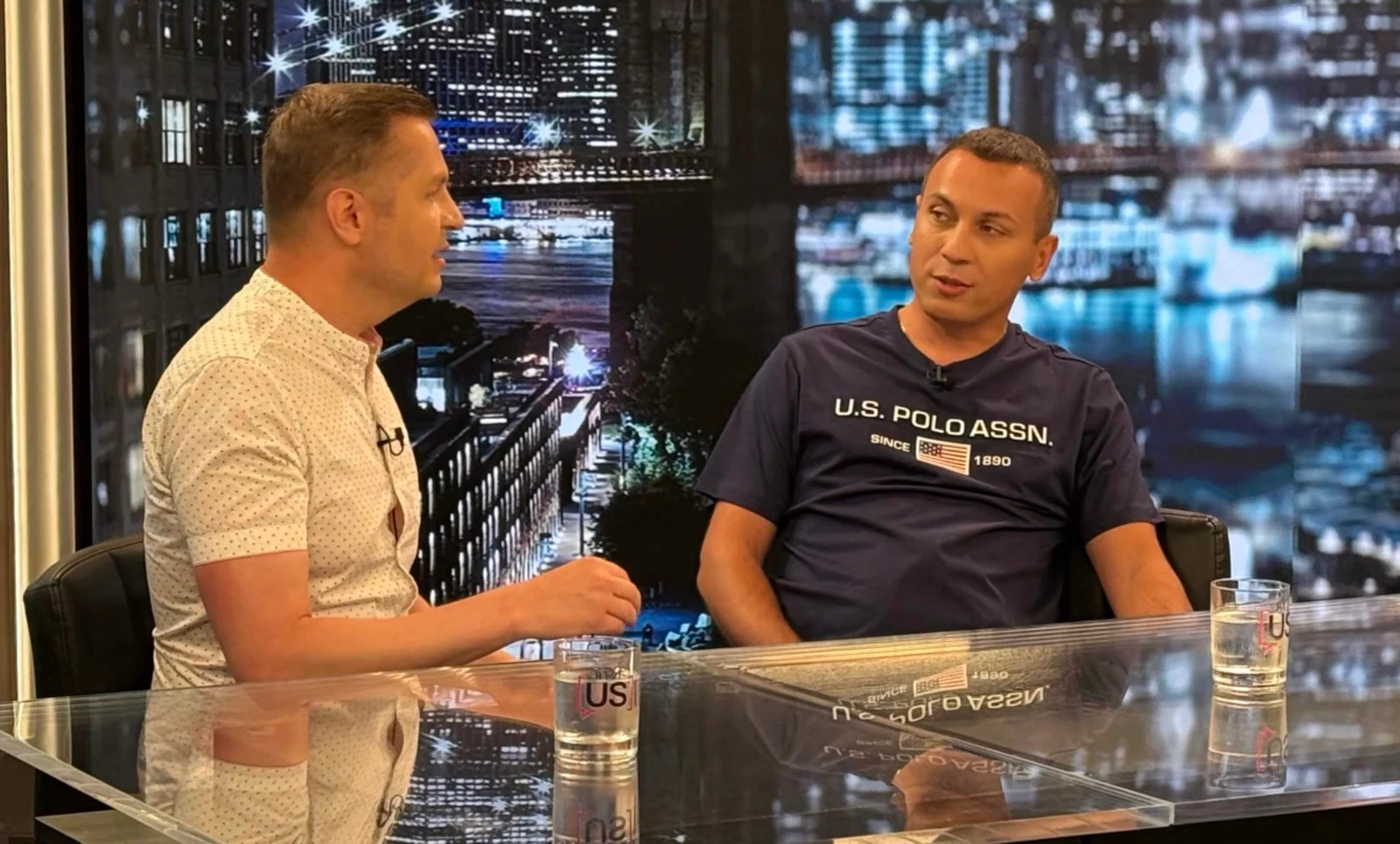
Comedy was one of the foundations of Oleksandr’s professional life. Years spent writing and working with humor taught him something fundamental about audiences: they are honest.
A joke works or it does not. Timing matters. Context matters. A pause can matter. What an audience expects to happen can be just as important as what actually happens.
Television added another discipline. Screenwriting brought structure, character and conflict. Working on different sides of the production process gradually gave Gorbatyi a broader understanding of how an initial idea becomes what an audience eventually sees.
Over the years, Oleksandr participated in television and comedy programs while also developing projects of his own. Among them was the International Television KVN Cup “Black Sea,” which he founded and where he also served as a jury member.
Formats, scale and responsibilities changed. One question remained: Why do some things connect with an audience while others do not?
Eventually, that question moved beyond day-to-day practice.
From Instinct to Method
In 2025, Gorbatyi published Semiotic Comedy — A Methodology for Constructing Humorous Narrative Based on Sign Systems and Context.
The book was not an attempt to leave practical work behind in favor of theory. Quite the opposite. After years in comedy, Oleksandr became interested in examining mechanisms he had long used largely by instinct: how expectations are created, what happens when they are disrupted, how familiar situations acquire new meanings, and why context can completely alter an audience’s response.
“For years, you simply know that something works,” he says.
“Then another question appears: why does it work? And can what you have learned through practice be explained and passed on?”
That interest also developed into academic research. In 2025, Gorbatyi published work examining the application of semiotic comedy in contemporary entertainment formats and the role of semiotics in humor transmission and audience engagement.
For Oleksandr, the point was not to add another credential to his biography. It was to turn accumulated knowledge into something that could be shared. That idea — that what a person learns over time can eventually become useful to someone else — has become increasingly important to the way he thinks about his profession.
From Writing the Story to Shaping the Whole
Screenwriting remains a professional foundation for Gorbatyi. Creative production, however, has allowed him to approach storytelling on a broader scale.
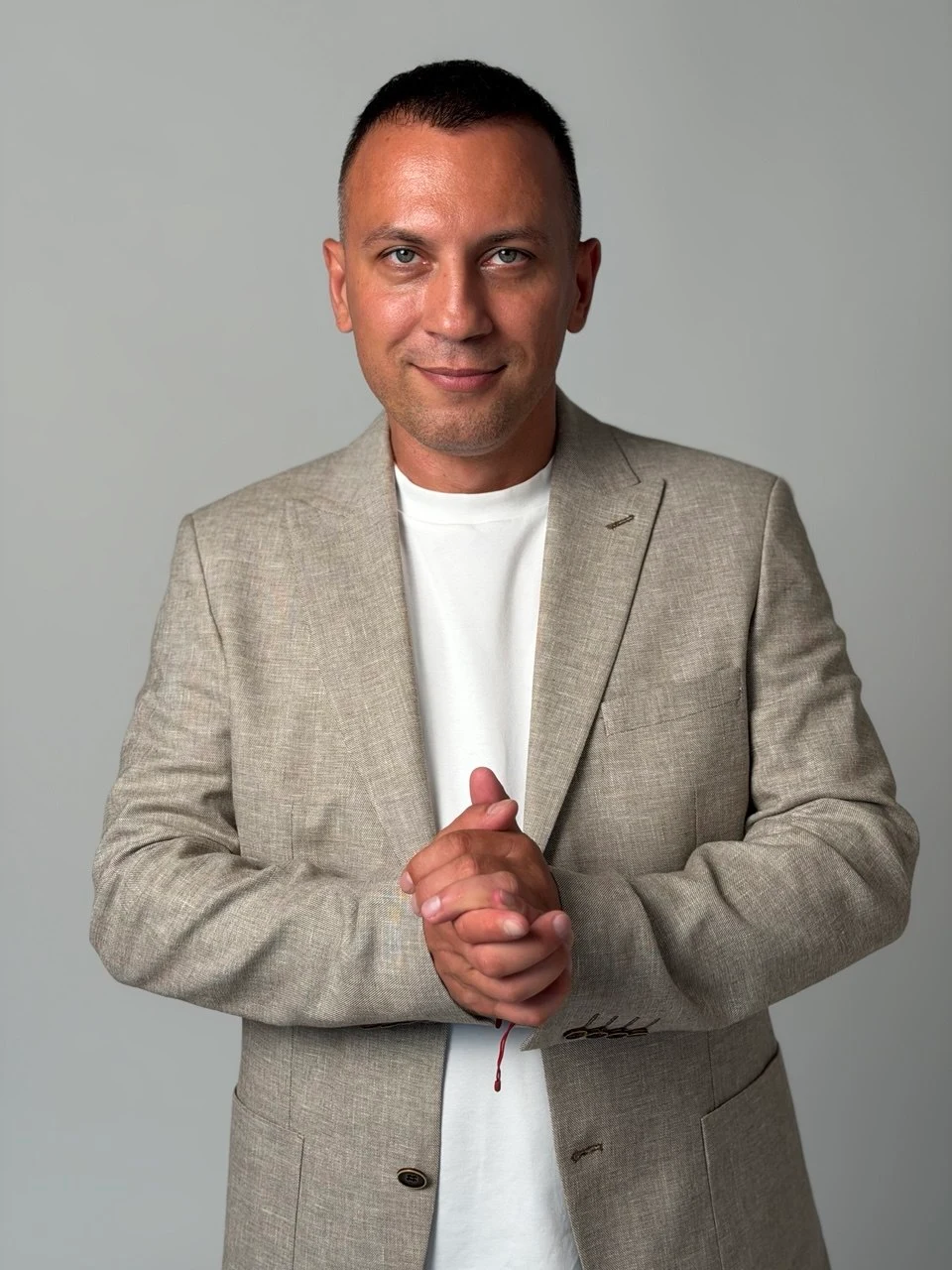
A screenwriter begins with narrative. A creative producer has to consider the larger environment around it: concept, image, performance, communication, audience and the relationship between all of those elements.
For Oleksandr, the transition was gradual. Becoming a creative producer did not mean that he stopped thinking like a writer. If anything, narrative thinking became the tool he could carry into entirely different formats.
That evolution is particularly visible in his work with DOM Production in the United States. Founded by director Oksana Nechaeva, DOM Production has become part of Gorbatyi’s professional life in the U.S. He works with the company as a screenwriter and collaborates as a partner on a number of projects.
One of those relationships has developed through the Follow Your Heart International Film Festival. Oleksandr served on the festival jury in both 2025 and 2026. In 2026, his involvement expanded when he joined the project as a Creative Producer.
There is a natural progression in that relationship. First came the invitation to evaluate the work of others. Then came a broader responsibility for helping shape the project itself.
When Experience Becomes Trust
Invitations to serve on juries have followed Oleksandr through different periods of his professional life.
Over the years, he has been invited to evaluate work across television projects, comedy competitions, various KVN leagues and other creative programs. At the International Television KVN Cup “Black Sea,” Gorbatyi occupied both sides of that process — as the project’s founder and as a member of its jury.

The scope of those invitations gradually became broader. In the United States, the Follow Your Heart International Film Festival brought him into the film festival environment, where he served on the jury for two consecutive years before expanding his involvement as Creative Producer.
Then came a very different field: contemporary art.
In 2026, Oleksandr joined the jury of the SURVIVAL RITUALS Best Artist Competition during Basel Art Week in Switzerland.
His jury work will continue in another setting this November. Gorbatyi is scheduled to serve as an honorary jury member at FMFW Night Out, a special talent event held as part of Florida Men’s Fashion Week on November 15, 2026.
The program, scheduled at Hilton Miami Aventura, is designed for singers, dancers, musicians, DJs, performers, comedians and other creative talents. It is supported by the VUGA Foundation as part of the Florida Supports Florida initiative.
The initiative is intended to support emerging Florida talent through professional photography, video production, media coverage, PR and event production.
Oleksandr does not treat jury work as a separate profession. It is better understood as a recurring role that has accompanied different stages of his career.
The setting may change — television, comedy, film, contemporary art or emerging talent — but the nature of the invitation remains similar: to bring a practiced eye and accumulated knowledge to someone else’s work.
There is a certain symmetry in that. Someone who has spent much of his life placing his own ideas before audiences eventually finds himself on the other side of the process — listening, watching and trying to understand what another creator is attempting to say.
A Different Creative Canvas
Fashion might seem like an unexpected environment for someone whose professional foundation was built around comedy, television and screenwriting. Gorbatyi sees less distance between them.
He does not position himself as a fashion professional in the traditional sense. His interest lies in the narrative surrounding a visual presentation — how an idea is communicated, how its different elements work together and what remains with an audience afterward.
Oleksandr’s work associated with Miami Fashion Week included creative concept development, overall creative vision, on-site creative supervision, promotional media content and scenario development for video materials.
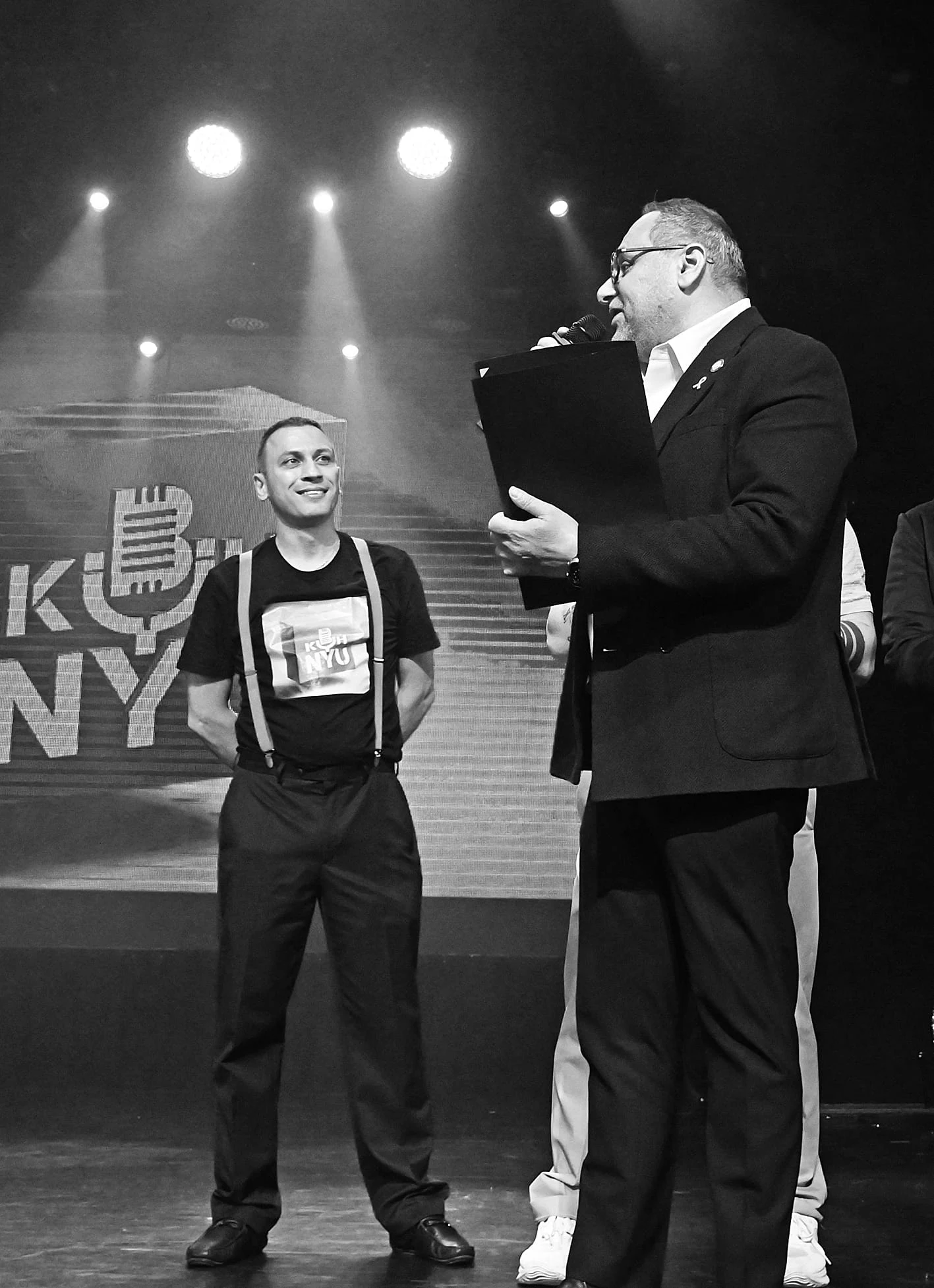
In 2026, that activity also extended into projects surrounding New York Fashion Week.
The environment was new. The questions were familiar. What are we trying to say? What should the audience notice? What should they feel? And what should remain after the presentation is over?
“I don’t think storytelling belongs only to film,” he says.
“The formats can be completely different, but there is still an idea, an audience and a connection that has to be created between them.”
Interestingly, the fashion environment eventually began providing Gorbatyi with material for screen storytelling itself.
Among his current projects is an original short-form vertical series set within the fashion industry, combining comedy and drama with the relationships among designers, models, producers and investors.
The circle is almost complete. Writing leads to production. Production opens a new environment. And that environment eventually becomes a story.
Recognition Along the Way
Oleksandr has received professional and cultural recognition at different stages of his career.
In 2025, he received the Worldwide Cultural Diplomacy Award. His distinctions also include the Order of Honor “Leaders of the 21st Century” and recognition as an Ambassador of Cultural Diplomacy.
In 2026, Gorbatyi received the Creative Excellence in Cultural Storytelling Award at the LAZIN Magazine Awards in Paris.
He speaks about such recognition with appreciation, but tends to place it within the larger timeline rather than at its center.
“Of course, recognition matters,” Oleksandr says.
“When you have spent years doing something, it means a lot to know that the work has been seen and valued. I appreciate that. But I never wanted an award to become the reason for doing the work.”
The distinction matters. Awards document particular moments. A creative life happens largely between them.
In years spent writing. In ideas that never become projects, and ideas that become something entirely different from what was first imagined. In the people you meet and work with. In mistakes. In learning. In beginning again. In being trusted with someone else’s idea. In continuing even when no one is presenting an award.
That less visible part of the profession increasingly defines what success means to Gorbatyi.
“What matters to me is being useful,” he says.
“Sharing what I know. Creating something that reaches people. Bringing what I have learned into different projects, different countries and different parts of the world. I live through this work. It is part of who I am.”
The geography of Oleksandr’s professional life reflects that idea. Ukraine, Europe and the United States represent different chapters, different people and different cultural contexts.
The forms have varied as well: television, comedy, screenwriting, film, creative production, research, contemporary art and international cultural initiatives.
But the point was never to collect as many definitions as possible beside his name. It was to remain part of the creative process — and to have something meaningful to contribute to it.
Starting Again Without Starting Over
Moving into the American professional environment required adjustment. But describing Gorbatyi’s American chapter as a new career would miss an important part of the story.
He did not arrive without a professional past. He arrived with decades behind him.
What changed was the context in which everything he had learned would now have to operate. New relationships had to be built. A different industry culture had to be understood. New formats appeared.
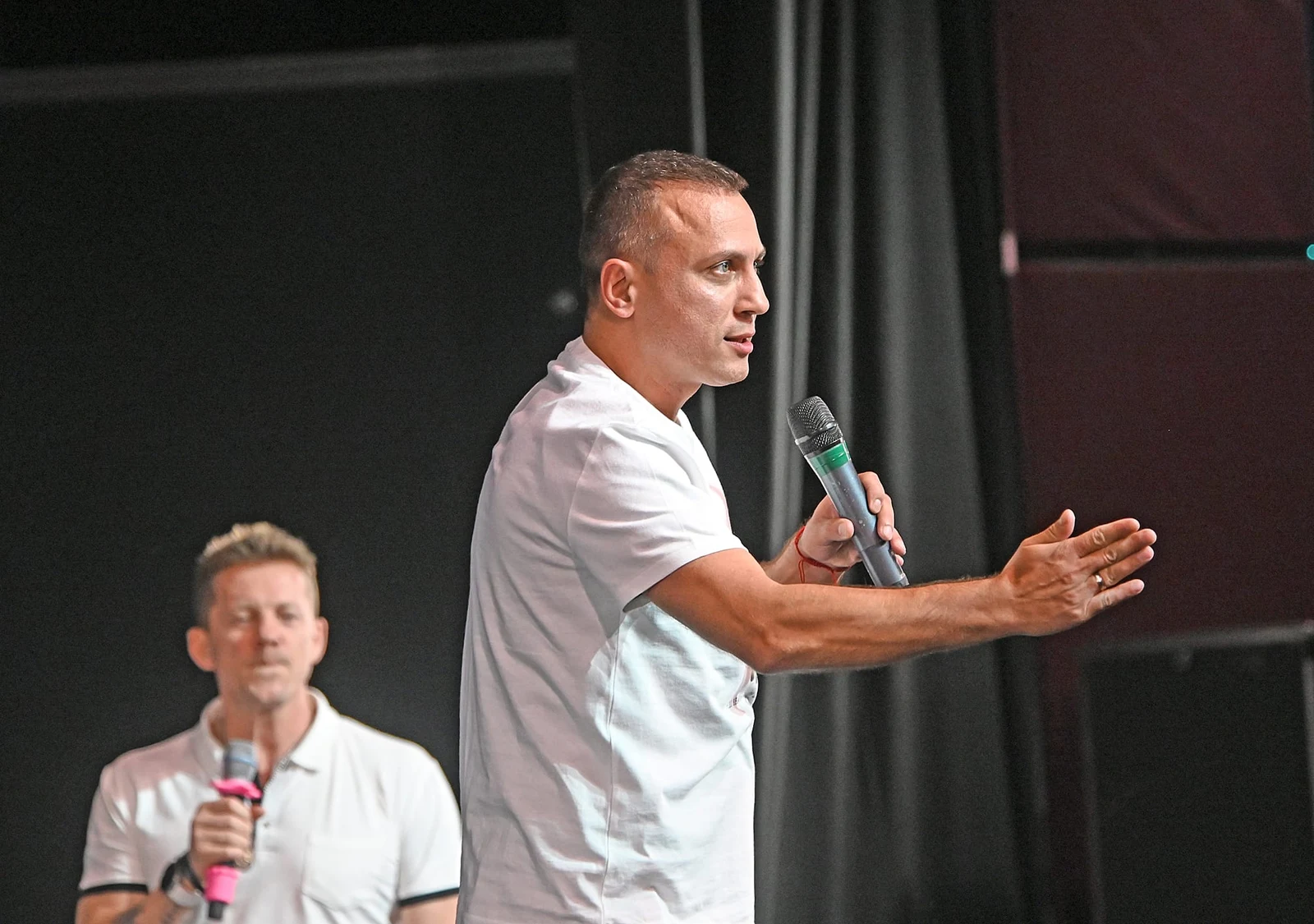
Creative production became a larger part of Oleksandr’s professional life, while film festivals, fashion-related projects and vertical storytelling opened additional spaces for his ideas.
There is a difference between starting over and beginning another chapter.
The first seems to ask a person to erase what came before. The second asks a more interesting question: What can you do with everything you have learned now?
That appears to be the question that interests Gorbatyi more.
Professional maturity does not eliminate uncertainty. It simply gives a person more ways to respond to it. Perhaps more telling is that, after more than twenty years, it has not eliminated Oleksandr’s curiosity either.
The Value of Time
These days, Gorbatyi increasingly talks about time. Not as an abstract philosophical idea, but as a very real personal and professional resource.
After decades of opportunities, experiments and new beginnings, maturity teaches more than how to say yes. It also teaches how to choose.
“When you are younger, you think mostly about what is still ahead,” Oleksandr says.
“Later, you understand that your time itself is part of the choice. The ambition is still there. You still want to create, build and move forward. You just become much more conscious of what — and who — you are willing to give your time to.”
It is not a retreat from ambition. It may simply be a more mature version of it.
There are still screenplays to write and projects to produce. Work around Semiotic Comedy continues. New collaborations are developing in the United States and internationally, along with ideas and formats that did not exist when his career began.
And the invitations continue. To create. To join. To evaluate. To share what he knows.
Perhaps that is one of the more honest measures of a long creative career. People keep calling. The invitations keep coming. His judgment continues to be sought. What he has learned continues to find new applications.
And he remains curious enough to say yes — when the reason feels right.
“Success changes meaning over time,” Gorbatyi says.
“At some point, it is not only about what you have achieved. It is also about what you are able to give.”
More than twenty years into his creative life, that may be the clearest way to understand where Oleksandr Gorbatyi is today — on October 23, another birthday, but hardly a conclusion.
He is not trying to live up to every definition that has ever appeared beside his name. He is not collecting achievements for their own sake. And he is not trying to recreate an earlier version of his career.
Oleksandr is taking what years of comedy, television, screenwriting, production and working with people have taught him — and looking for new places where all of it can be useful.
The next act, in that sense, is not about leaving the previous ones behind. It is about knowing what is worth carrying forward.
Photo by Oleksandr Gorbatyi