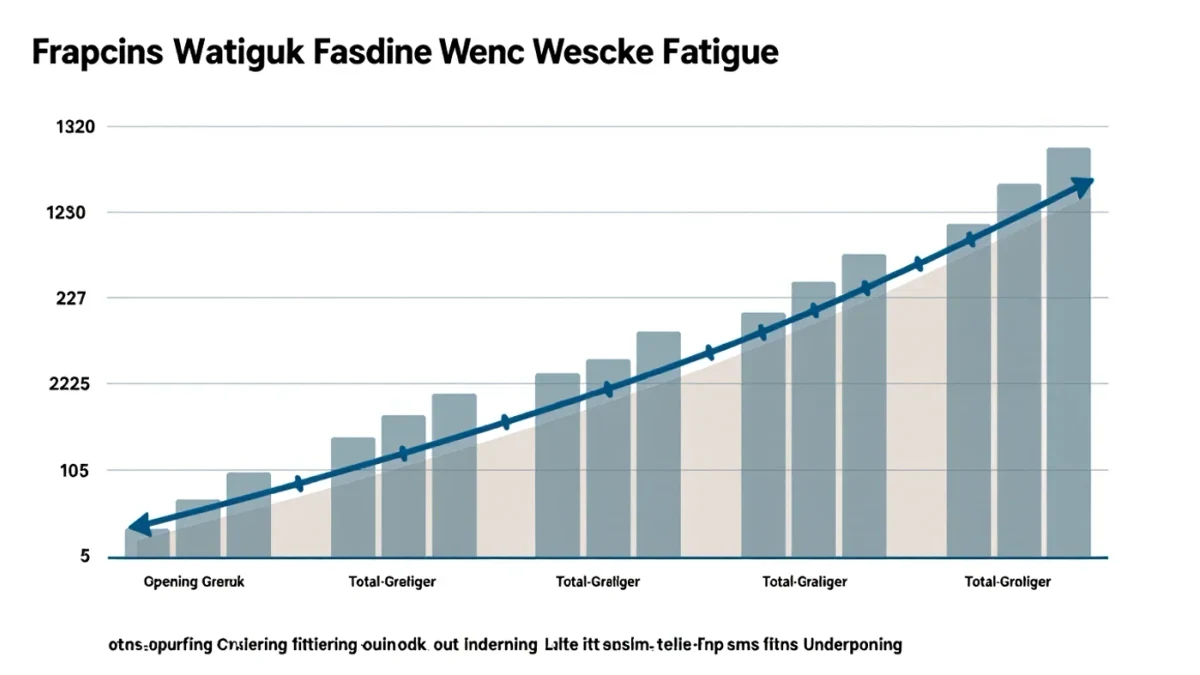
Franchise fatigue shows up in the data as declining multipliers, aging opening-weekend audiences and a widening spread between franchise winners and casualties — not as an outright collapse of IP grosses. The domestic box office's structural numbers tell the first part: annual grosses stabilized well below the 2018-19 peak of roughly $11-12 billion, settling in the $8-9 billion range in the mid-2020s even as individual event films posted historic openings. That divergence — record single-title performance inside a smaller aggregate — is the signature of a market concentrating demand into fewer, bigger bets while a growing share of franchise releases underperform their predecessors.
What does the sequel math show?
The cleanest metric is the multiplier — total gross divided by opening weekend — tracked alongside sequel-to-original drop-offs. Fatigue appears when later installments open at or near predecessor levels but decay faster, indicating that the brand still commands first-weekend curiosity but no longer sustains word-of-mouth legs. The pattern repeated across the 2023-25 cycle: high-profile sequels and threequels in action and adventure franchises posted steep second-weekend declines relative to earlier entries, while animation — where the audience refreshes itself every few years — continued to produce strong multipliers. Horror franchises split the difference, with long-running series showing diminishing openings even as the genre overall kept its efficiency.
The demographic data sharpens the diagnosis. Exit polling tracked by studios showed franchise openings increasingly skewing older and more male relative to a decade earlier — the residual audience of the brand's original fans — while newer, original or freshly rebooted properties pulled younger and more balanced crowds. A franchise whose core quadrant is aging without replacing it is not declining abruptly; it is amortizing its audience downward, installment by installment.
Why did the fatigue set in?
Supply-side saturation is the primary cause. The number of franchise films — sequels, reboots, spinoffs, shared-universe entries — released annually roughly doubled from the mid-2000s to the late 2010s, and the multiplication continued into the 2020s with streaming-commissioned extensions. Audiences did not stop liking franchises; they started rationing them. The behavioral evidence is in the walk-up data: post-pandemic moviegoing became more deliberate, with same-day ticket purchasing concentrated in must-see events, while the middle tier of 'agreeable' franchise entries — films audiences previously attended casually — lost the casual attendance that had quietly subsidized their grosses.
The second cause is narrative debt. Serialized franchise architecture asks audiences to have seen four prior films to receive full value from the fifth. That structure rewards the existing fan base and raises the entry price for everyone else — a rational strategy for a mature IP and a poor one for audience renewal, which is the thing the exit-poll data shows eroding.
Which franchises beat the fatigue?
The data identifies a consistent profile of immunity. Family animation refreshes its audience on a five-year cycle as children age in, which is why animated sequels have been the most reliable multiplier performers of the era. Horror restarts cheaply: reinvention costs a fraction of a tentpole reboot, so even fatigued series can be re-engineered profitably. Legacy IP with genuine cultural dormancy — properties absent long enough to convert nostalgia into first-time demand — outperformed mechanically maintained annual franchises. And the event-tier films that felt singular rather than episodic, whether auteur-driven spectacles or genuinely climactic team-ups, continued to post records. The casualties cluster in the middle: the fourth and fifth entries of series maintained on schedule, the spinoffs of spinoffs, the universe extensions that no one had asked to be serialized.
How are studios responding?
By re-pricing franchise risk. The visible moves: longer gaps between installments, fewer spinoffs per property, reboots with full creative resets rather than continuity extensions, and a measurable reinvestment in original tentpoles and mid-budget films to rebuild the pipeline of future franchises — because the industry's own data shows that its most valuable properties were once untested originals. The 2025-26 slate construction reflects this: studios spaced their event films more deliberately and greenlit original event-scale projects alongside the sequels, hedging a concentration risk that the box-office spreads made impossible to ignore.
The honest conclusion from the numbers is narrower than the discourse around it. Franchise fatigue is not the death of IP-driven film-making — the biggest openings of the modern era are franchise openings. It is the end of the assumption that any maintained franchise performs, which was arguably never true and is now measurably false. The box office has repriced brand equity: it must be re-earned per property, per installment, through renewal of the audience rather than repetition at it. The spreads between winners and casualties will keep widening, and reading them — multiplier against opening, quadrant against quadrant, sequel against predecessor — is how the trade press knows which franchises are alive before the studios say so themselves.
What does the international data add?
The fatigue pattern is not uniform across territories, and the variance carries information. Overseas markets — which now supply the majority of a typical tentpole's gross — sustained franchise performance longer than domestic audiences did, partly because some franchises were newer there and partly because event spectacle travels better than characterization-dependent installments. The narrowing came later and unevenly: markets with fast-growing theatrical infrastructure rewarded spectacle consistently, while mature markets mirrored the domestic demographic drift. China's regulated release calendar adds structural noise — blackout windows and quota timing can suppress a franchise's gross for reasons unrelated to demand — which is why serious franchise analysis separates China-adjusted performance from raw totals. The general finding holds internationally in weaker form: the concentration into fewer, bigger event films is a global phenomenon, while the fatigue of mid-tier serialized entries is most acute in the most saturated market, the United States.
What metrics should replace opening weekend in evaluating franchises?
Three, used together. Second-weekend hold, the fastest indicator of whether an installment has word-of-mouth beyond its marketing. Quadrant balance on opening, which reveals whether the franchise is renewing its audience or drawing down its original cohort. And profitability relative to negative cost rather than absolute gross, because the relevant question is not whether an installment earns nine figures but whether it earns them against a budget that grew with the series' cast options and VFX expectations. A franchise can post declining grosses and improving margins if budgets are disciplined — the quiet strategy behind several long-running horror and action series. The trade read is therefore multidimensional: grosses tell you what happened, holds tell you why, demographics tell you what happens next, and margin tells you whether the studio will make another one regardless.