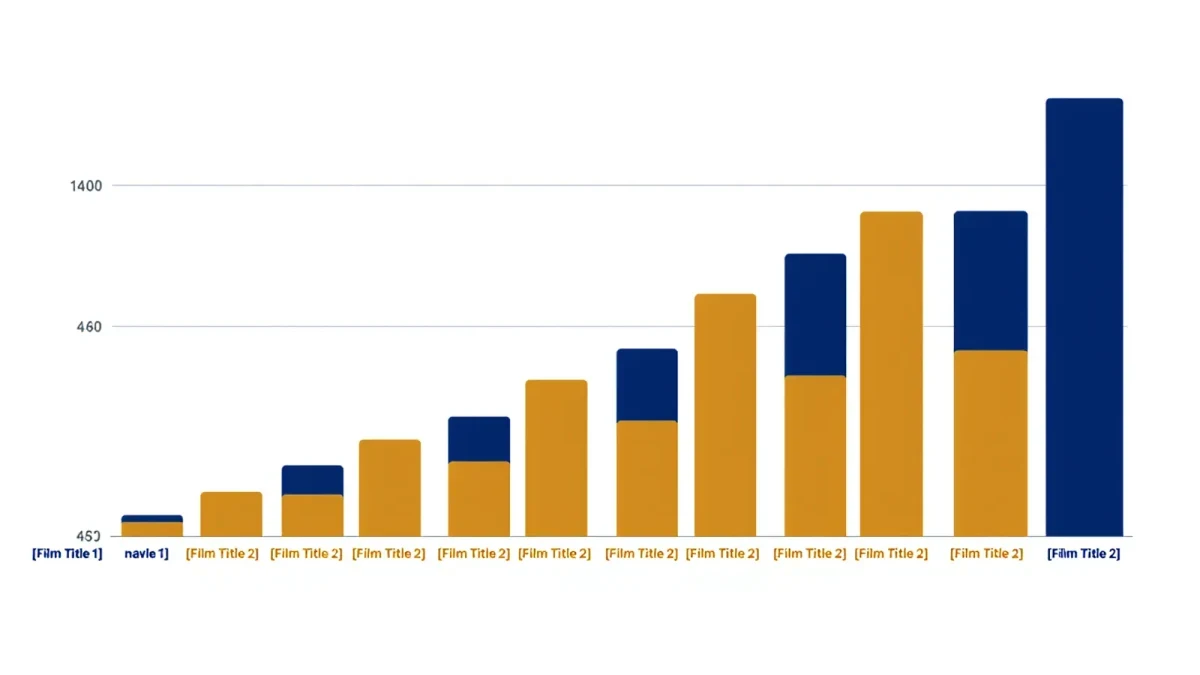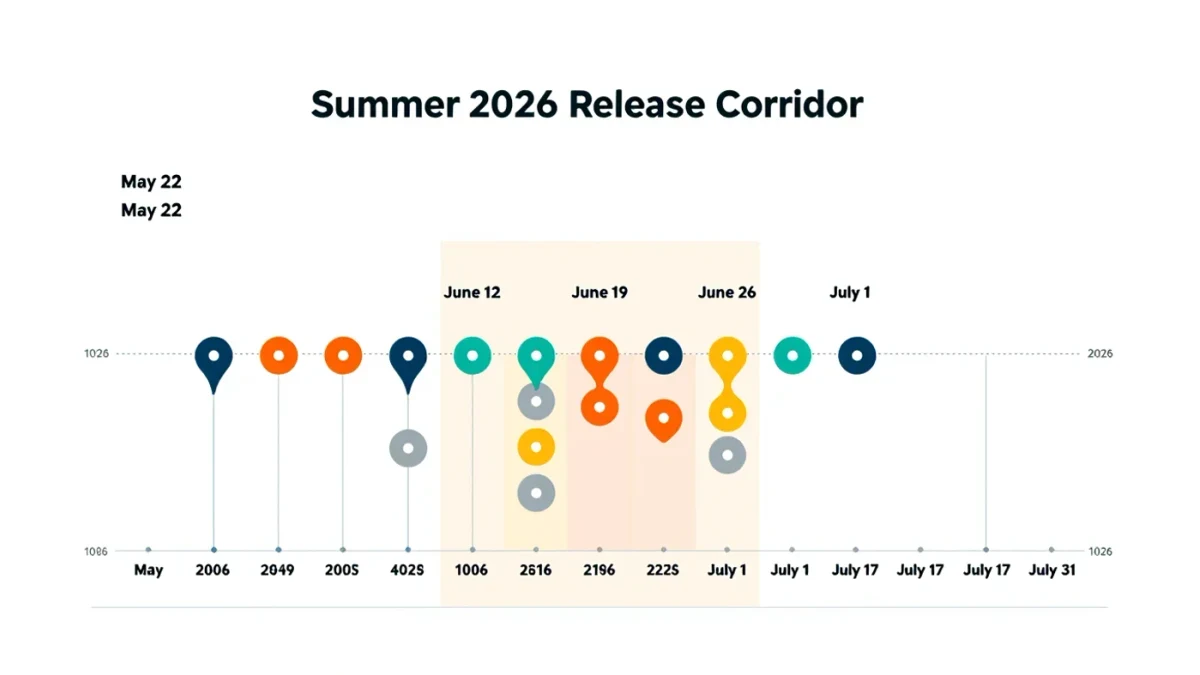
Studios move summer release dates for one of three reasons: production is not ready, a rival tentpole has claimed the same corridor, or the film tested better than expected and deserves cleaner real estate. The clearest recent case study played out across the 2026 calendar itself — Marvel shifted Avengers: Doomsday out of its May slot to December 18, 2026, and the ripple moved half the industry's fourth-quarter planning with it. Every shift is a negotiation between a studio's own confidence and the physical limits of the summer corridor, which holds only about a dozen premium weekends.
What actually triggers a release-date move?
The formal trigger is almost always mundane: a missed production milestone. Visual-effects-heavy tentpoles need 12 to 18 months of post-production, and a two-month delay in principal photography cascades into a missed delivery date. When a film cannot be finished at theatrical quality, the date moves — usually to a comparable corridor in the following year, where the studio already has optioned slots.
The competitive trigger is more interesting. Studios track rival slates continuously, and when two event films land within a week of each other, one typically yields. The calculus is brutal: two tentpoles opening head-to-head split the opening-weekend audience, depress both multipliers and hand the exhibition sector a weaker aggregate than either film would have earned alone. Sony and Marvel's decision to slot Spider-Man: Brand New Day on July 31, 2026 — moving off an earlier date one week after Christopher Nolan's The Odyssey — was a classic avoidance maneuver, buying the superhero film room after the IMAX-heavy epic opened July 17.
Why is the summer corridor so congested?
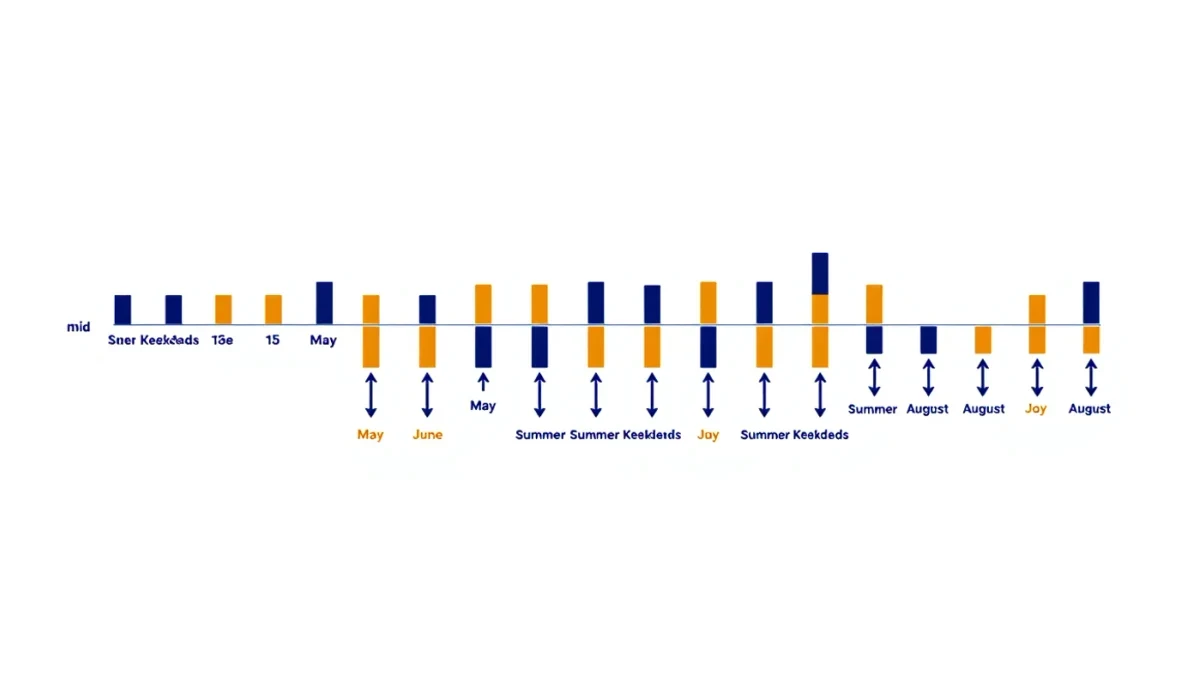
Between mid-May and mid-August there are roughly 13 weekends, and only about nine of them historically support a $100 million domestic opener. Memorial Day, the July 4 corridor and the third weekend of July command the strongest walk-up business; schools are out, weekday matinees perform, and a hit can leg out for six weeks. Studios with four or five tentpoles a year must stack them into that band, which guarantees congestion and therefore guarantees moves.
The congestion has a second cause: scarcity of premium screens. IMAX and large-format auditoriums are a fixed inventory, and a Nolan film contractually dominates them for weeks. A competing spectacle that depends on premium-format grosses — a large share of a modern tentpole's opening — cannot perform at full strength without that inventory. Scheduling around premium screens is now as important as scheduling around rival films.
How far in advance do dates get claimed and moved?
Franchises claim dates three to four years out, before scripts exist. The claim costs nothing but signals commitment to exhibitors and investors. What follows is a years-long process of adjustment: dates shift as scripts stall, directors turn over, or rival claims make a weekend untenable. A typical tentpole moves at least once between announcement and release; some move three times.
Trade observers track these moves as confidence signals. Moving a film earlier usually means testing went well and the studio wants a stronger corridor. Moving later can mean trouble in post-production — or a deliberate dodge of a competitor, which is not a sign of weakness but of arithmetic. Moving to a dump month like January or late August, with minimal marketing support, is the signal nobody wants: the studio is cutting losses.
What does a move cost?
The visible cost is marketing. A dated campaign — teaser, trailer drops, talent tours, brand-partnership activations, outdoor buys — is built around a specific weekend, and a shift forces renegotiation of media plans and partner agreements. The invisible cost is exhibitor relations: theaters build their summer staffing and screen allocation around announced dates, and repeated moves make a studio a less reliable booking partner. There is also opportunity cost: vacated premium weekends get claimed by rivals within days, sometimes hours.
Offsetting those costs is the downside avoided. A $200 million production that opens against an incompatible rival can leave nine figures of gross on the table. Against that math, a mid-course correction is cheap. The 2020s have made studios more willing to move, not less, because post-pandemic audience behavior is less predictable — walk-up business matters more, opening-weekend predictability is lower, and a mis-dated tentpole fails faster.
When is a date move actually a red flag?
The pattern matters more than the event. A single shift with a clear competitive rationale is routine. A shift accompanied by a change in the release pattern — a wide film going to platform, a theatrical film moving to the studio's streaming service — is a restructuring. And a shift into a graveyard corridor, announced quietly and late, is effectively a write-down announced in calendar form.
The reverse also holds. When a studio holds a claimed date through production turbulence, it is telling the market the film will be finished and finished well. When it voluntarily moves into a stronger, riskier corridor against heavier competition, it is telling the market the picture over-performed in tests. Reading the release calendar as a sequence of corporate statements — rather than a list of openings — is the core skill of slate analysis. The dates move because money moves first; the calendar merely catches up.
How do exhibitors respond to date moves?
Theater chains build their summers around announced dates months ahead. Booking, staffing and concessions provisioning all key off the expected volume of a given weekend, and a late date change forces chains to re-program screens, re-cut marketing materials and renegotiate trailer obligations with other studios. Large chains absorb this routinely; smaller and regional exhibitors feel it acutely, because a vacated tentpole weekend in a single-screen market can mean an empty house for a fortnight. This is why studios negotiate major moves with large exhibitors quietly in advance — the public announcement confirms what the booking departments already know.
Exhibitors also have their own leverage: screen allocation. A chain deciding how many auditoriums a film gets in week three is making a forward-looking judgment about its legs, and that judgment responds to how a studio has treated the theater's calendar in the past. Reliable booking partners get the benefit of the doubt on holdover weeks; studios with a record of late moves find their titles trimmed faster when performance softens. The relationship is commercial, not sentimental, but it compounds exactly the way relationships in a concentrated market do.
Do international dates follow the domestic calendar?
Largely, with engineered exceptions. The standard pattern rolls a film out across territories within a two-to-three-week band around the domestic date, coordinated to align global marketing spend. The deliberate deviations are strategic: day-and-date global releases for piracy-exposed event films, earlier international launches when a property over-indexes overseas, and staggered releases timed to local holidays or to avoid sporting events that dominate a market's weekend. China remains its own scheduling system, with release dates granted by regulators and blackout windows protecting local productions — which is why a film's Chinese date often lands weeks or months after everywhere else, and why studios plan tentpole performance modeling with that variance built in.