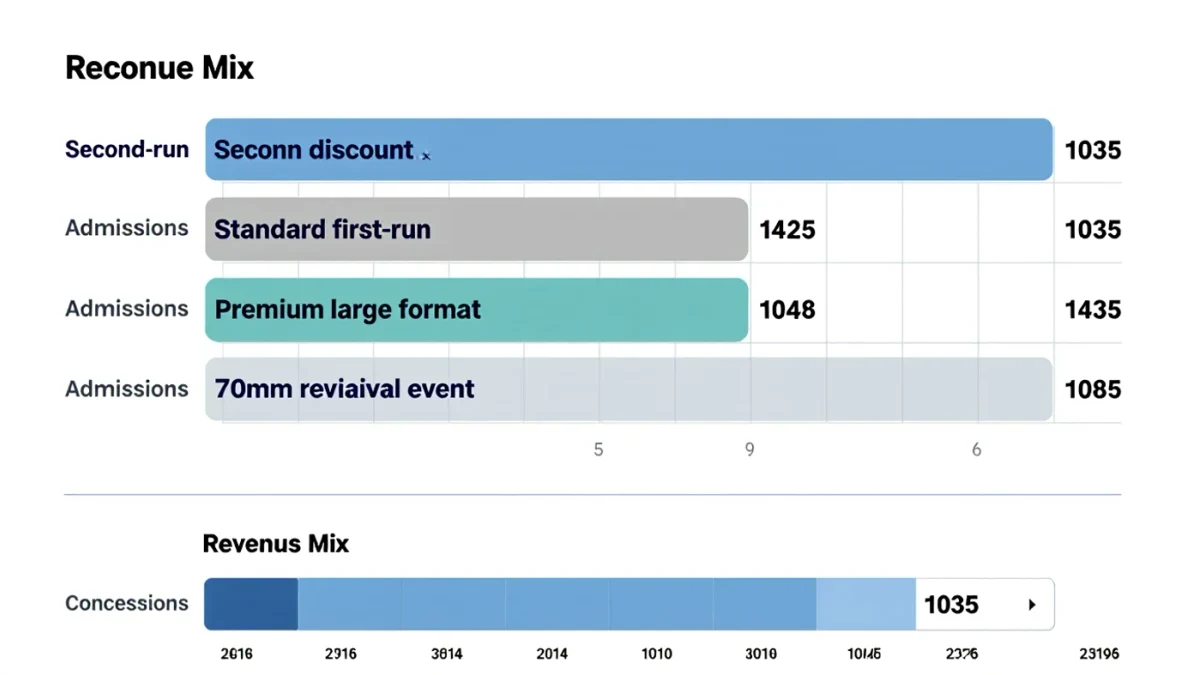
While the exhibition industry's headline numbers track multiplexes and premium screens, a quieter counter-trend has grown for years: revival and second-run cinemas. The discount house — tickets at a dollar or three for films weeks past their release — and the repertory house, programming older films on film or restored digital, have expanded in major markets even as total screens consolidated. The economics are narrow but real, and the audience is younger than the format's nostalgists expected.
What is a second-run cinema?
A theater licensed to play films after their initial theatrical window, at a fraction of first-run ticket prices. The model is old — it predates home video as the neighborhood's cheap night out — and its modern version survives in a specific niche: families, students and price-sensitive audiences who wait weeks for the discount. Second-run houses split smaller percentages with distributors, make their margin on concessions like everyone else in exhibition, and live or die on volume and lease costs. Suburban discount chains have grown quietly in recent years while first-run exhibition consolidated.
What is a revival house, then?
A repertory or revival cinema programs films from the archive rather than the release schedule: classics, cult titles, genre series, director retrospectives, often on 35mm or 70mm prints where archives and distributors still supply them. The model urbanized — New York's repertory scene, Los Angeles's specialty venues, London's and Paris's equivalent institutions — and the audience skews surprisingly young, drawn by collective viewing, print rarity and curation as taste-making. A screening of a pristine 70mm print is now an event with a ticket premium attached, the mirror image of the discount house.
Why is this growing now?
Several forces converged. Streaming flattened availability — everything is accessible, so scarcity moved to the communal and the physical: prints, big screens, audiences that laugh together. The pandemic hardened the habit of treating cinema-going as deliberate rather than default, and event programming — anniversaries, restorations, franchise retro series — gave people reasons to leave the house for films they could stream at home. Meanwhile the archive pipeline improved: studios restored back catalogs for 4K discs and licensing, giving revival houses fresher material to book.
Real estate is the fragile part. Revival houses tend to occupy older single-screen buildings with low rents, and success raises the landlord's ambitions. Several beloved venues have closed or fought evictions; others survived by owning their buildings or operating as nonprofits with memberships and donor bases.
How do revival houses get their films?
Through distributors' repertory arms and studio archive licensing, on terms set per booking — a percentage of the door, minimum guarantees, print shipping or hard-drive costs. Print availability is the hard constraint: 35mm prints wear and archives retire them, and 70mm engagements are rare enough to be news. The programming skill is packaging — series that give individual titles context, from "giallo summer" to a director's complete works — because curation is the product a rep house sells that streaming cannot.
Do second-run and revival serve the same audience?
Overlapping but distinct. The second-run customer is price-driven and current-release-oriented; the revival customer is experience-driven and schedule-flexible. What links them is the value of the theatrical window after the window — proof that a film's commercial life on a big screen does not end with week six or with its original decade. Both models also feed the same habit: going to the cinema as a chosen activity rather than a default, which is precisely the habit the exhibition industry's future depends on.
What is the outlook?
Cautiously favorable, with structural fragility. The audience for curated, communal filmgoing has demonstrably grown, and the generation that sustained it through streaming-era prices is aging into spending power. But the format depends on cheap real estate, archival generosity and exhibitor passion — none guaranteed. The revival house is exhibition's artisanal sector: small, culturally loud, economically marginal, and increasingly the place where the medium's past is actually watched the way it was made to be seen.
What does a revival calendar actually look like?
Programming runs on series logic. A month might pair a director retrospective with a midnight-movie strand and an anniversary reissue, each title licensed individually and marketed to a list built over years. The best programmers are curators with point of view — audiences follow the house, not just the titles, the same way listeners follow a record label. That is the asset a rep house owns that no streamer can license: trust in taste.
The format also feeds the restoration economy. Anniversary re-releases give studios a reason to fund 4K scans and new prints, and revival houses provide the exhibition endpoint that justifies the spend. Archive cinema, in that sense, is not a museum wing — it is the demand side of film preservation.
Where does the audience come from?
Largely from under-35 viewers, to the consistent surprise of observers. Social media made film history browsable — a clip economy that funnels curiosity toward full screenings — and the communal screening answers a demand the algorithm cannot: a room, a time, a print. The older art-house audience did not disappear; it just stopped being the only one.
The two models also anchor opposite ends of the price spectrum, and that bracketing is strategically useful for the wider industry: the discount house catches the price-excluded audience, the revival house catches the experience-driven one, and both convert streaming-native viewers into theatergoers. Exhibition's future may look like a barbell — premium spectacle on one end, cheap and archival on the other — with the conventional midweek mid-priced show squeezed between them.
For a viewer, the actionable version is this: find your city's second-run house for cheap current releases, and its repertory institution for the calendar worth planning around. Both are easier to find than a decade ago, which is itself the story.
The second-run house keeps current cinema affordable; the revival house keeps cinema history alive in the format it was made for. Between them they cover the parts of the audience the multiplex forgets, and both are growing in the streaming era for the same reason: what everyone can access anywhere is worth least, and what plays once, together, on a big screen is worth the ticket.