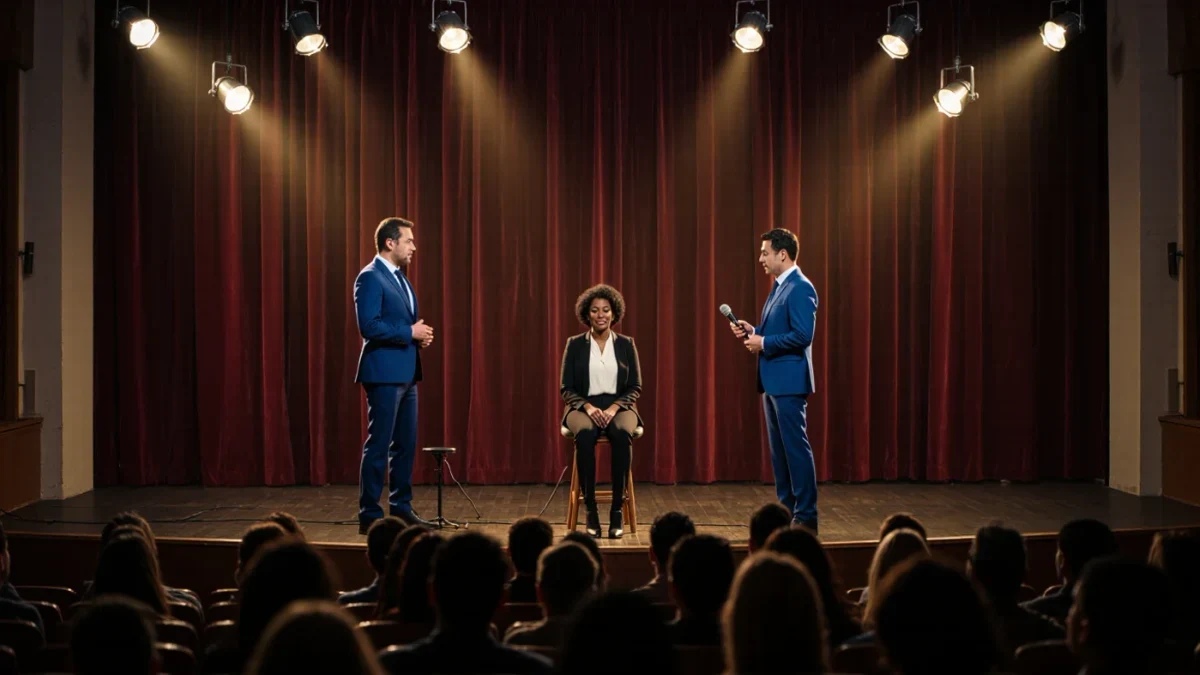
A late-night appearance sells a movie through arithmetic, not accident. When a star sits on a talk-show couch the week before release, the segment is clipped for social platforms, quoted by morning shows and pushed by the studio's own channels, multiplying a single twenty-minute conversation into hundreds of press impressions. Studio marketing departments plan late-night bookings the way media buyers plan ad placements, with target-audience overlap, host demographics and clip-ability all priced in advance.
Why does late night still matter for movie marketing?
Because it is one of the few remaining mass-attention formats that audiences choose to watch. Digital marketing fragments attention into micro-targets; a broadcast talk show delivers a concentrated audience in a single night, and, more importantly now, a pre-produced clip package that travels. A strong segment generates a viral clip that outperforms its broadcast numbers many times over on social platforms, and studios increasingly book couches for the clip, treating the broadcast as the origin point of a social campaign.
Timing is everything. The booking window for a theatrical release is the two weeks before opening, with the sweet spot in the final week, when awareness converts into ticket purchase intent. For streaming films, the window shifts to launch week itself, since viewers can act immediately, making the call-to-action effect more direct and measurable.
How are bookings actually arranged?
Through studio publicity and the shows' booking departments, months in advance for prime slots. A studio marketing a summer tentpole negotiates packages: the star on the couch, possibly a clip premiere, maybe a game segment or a themed skit. Shows compete for A-list guests because star bookings drive their own ratings, so the negotiation is mutual, and publicity teams leverage that competition for better segment treatment, host choice and lead-guest position.
Host selection is strategic. Each show skews to a demographic, and publicity teams match the film's target audience to the host's. A horror film's young cast hits the younger-skewing shows; an awards drama's veteran star books the hosts whose audiences overlap with academy voters, which is why late night also functions as an awards-campaign stop from September through February.
What makes a segment actually work?
A rehearsed anecdote that feels spontaneous. Publicists prepare stars with stories shaped for clipping: a short setup, a physical or visual payoff, and ideally a hook involving a co-star who can be tagged in the clip. Segments involving games, musical numbers or food stunts reliably travel further than straight conversation because they are visually self-contained. The star's job on a couch is closer to short-form content performance than to interview.
The calculation extends to vulnerability and comedy. Self-deprecating stories humanize an actor whose persona may be heroic on screen; a botched audition story or a family anecdote builds parasocial connection that a trailer cannot buy. Marketing researchers describe this as trust transfer, and it is the actual mechanism by which a couch conversation becomes a ticket purchase.
Is the effect measurable?
Increasingly, yes. Studios track social engagement on official clips, search-term lift after a segment airs, and tracking-survey movement in awareness and definite-interest across a film's campaign. Late night is one input among many, alongside trailers, sports-adjacent spots, influencer screenings and podcast tours, but its contribution is visible in search data the morning after a strong segment. Marketing teams also measure the half-life of a clip: a viral moment decays within days, which is exactly why bookings are compressed into release week rather than spread across a month.
The podcast tour has become late night's supplement, reaching niche audiences at podcast length and depth. But podcasts rarely produce the mass-simultaneity effect of a broadcast moment, and they lack the visual clip package. The two channels are used together, podcasts for depth and late night for reach.
What happens when a segment goes badly?
Publicity teams worry as much about the bad appearance as the missed one. A star who is flat, hostile or visibly tired generates clips too, and negative clips travel faster. This is why media training for talk shows is specific: energy pacing across multiple tapings in one day, anecdote rotation so consecutive nights do not repeat, and prepared deflections for personal questions. The walk-off and the awkward freeze are the genre's disasters, and booking professionals remember which publicists delivered prepared guests.
Do stars still do it willingly?
Most do, because the alternative channels demand more for less certainty. A late-night run compresses a press day into high-production-value exposure: professional lighting, a band, an approving audience and a host contractually invested in making the guest look good. For a star with a film to sell, that remains the best trade in show business, which is why, across the streaming era's upheaval of every other marketing convention, the release-week couch tour has never gone away.
How has the shrinking late-night landscape changed the strategy?
The number of broadcast talk shows has contracted, which concentrated value in the surviving couches and pushed studios toward the handful of hosts who reliably generate viral clips. With fewer slots available, booking competition intensified, and publicity teams now lock release-week appearances far earlier than they did a decade ago. The scarcity also elevated substitutes: daytime talk, sports-adjacent programming and late-night-adjacent streaming formats now share the release-week calendar that broadcast couches once owned outright.
For smaller films without tentpole budgets, the shift has been clarifying. A single well-placed appearance on the right host's show can deliver the awareness lift that an ad buy could not afford, which keeps the format disproportionately important for independent releases. The couch remains one of the few marketing assets whose cost is measured in a star's time rather than a studio's media budget, and that asymmetry survives every platform change.