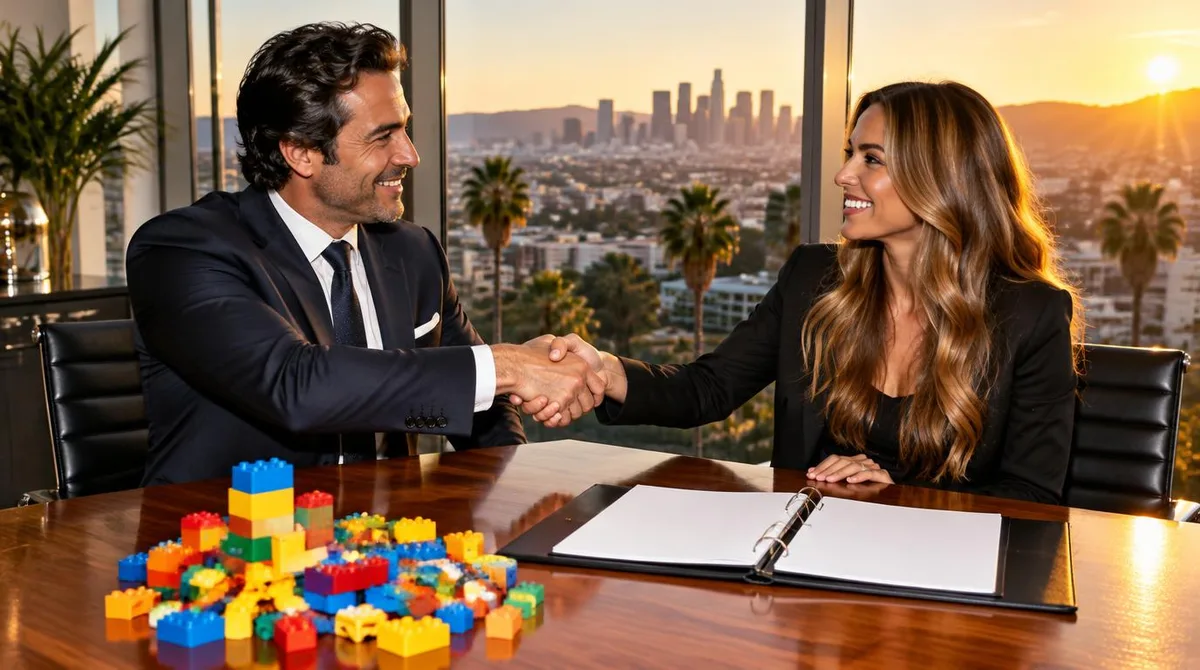
Lego has hired its first head of celebrity talent and brand first partnerships, and the hire matters beyond one toy company. Kelsey Gray Sherman joined the Lego Group in the role, which sits inside the Entertainment, Partnerships & Content division. According to Variety, the company says the position reflects its growing focus on expanding the Lego brand's presence across entertainment and culture.
The job itself is the story. A dedicated executive for celebrity relationships, based in Los Angeles, signals that talent partnerships have become a standing business line rather than a one-off deal. For readers tracking how celebrities get paid and how brands court them, this is a case study in how the machinery works. Sherman comes to Lego from WME, where she served as vice president of the Entertainment Marketing & Advisory group, per the Variety report. She will report directly to Jill Wilfert, Lego's senior vice president of Entertainment, Partnerships & Content.
This kind of hire also shows how the plumbing behind celebrity deals is changing. The structure of these arrangements, from fees to usage rights, is laid out in our guide to how celebrity endorsement deals are structured behind the scenes. Lego's move suggests the demand side of that market is professionalizing in-house.
What will the new role actually do?
Sherman will shape the toy and media company's approach to celebrity talent. That means identifying and building relationships with entertainers and brands in ways that go beyond traditional licensing and product collaborations, according to the press release cited by Variety. In plain terms: instead of renting a star's face for a box of bricks, the company wants durable creative relationships.
The "brand first partnerships" half of the title points the same direction. The phrase suggests deals built around a brand's identity first, with talent chosen to fit it, rather than a celebrity attachment bolted onto a product launch. That is a different animal from the classic endorsement, and it needs someone whose full-time job is managing the relationships.
Why put the job in Los Angeles?
Sherman will be based in Los Angeles, the report states. The location is not decorative. Talent relationships run on proximity: meetings, screenings, premieres, and the casual encounters that turn a pitch into a partnership. An in-house executive planted in the market can respond to opportunities the way an outside agency cannot. It also puts Lego's representative inside the same rooms where studios, agencies, and publicists operate, the ecosystem we cover in how publicists shape what you read about stars every week.
Who is Kelsey Gray Sherman?
Sherman joins from WME, the talent agency, where she was vice president of the Entertainment Marketing & Advisory group, per Variety. That background is the point of the hire. She arrives with what the company's own release calls deep relationships across the talent and entertainment communities, along with a strong understanding of the Lego brand.
Wilfert's statement in the release made the case directly. "Kelsey brings deep relationships across the talent and entertainment communities, along with a strong understanding of the Lego brand," Wilfert said. "She knows how to bring together the right talent, partners and ideas in ways that feel fresh and authentic, and her experience and instincts will be invaluable as we continue to grow our work in entertainment and culture."
Sherman, for her part, noted she had worked closely with the Lego Group for many years before joining. "Having worked closely with the Lego Group for many years, I've seen first-hand its unique ability to bring together entertainment, experiences and culture," she said in the release. "I'm excited to build on that strength through ambitious, distinctive partnerships with exceptional talent and brands."
Why does a toy company need a Hollywood whisperer?
Lego has built a large presence in the entertainment industry and cultural zeitgeist, with partnerships that date back decades, according to Variety. The company's collaboration with the "Star Wars" franchise spans toy sets, television projects, and a popular video game. The flagship Lego movies are considered big successes.
More recently, the company partnered with Pharrell Williams in 2024 to create a biopic animated entirely with Lego bricks. That project is the clearest preview of what the new role is for: a celebrity-driven creative work, not a licensed playset. A dedicated talent executive exists to find and build more of those. The appetite for talent-driven screen work cuts across animation and live action alike, a dynamic we track in voice acting in franchise animation.
What does this mean for celebrities and their teams?
The hire tells talent representatives that a major consumer brand now wants relationships, not transactions. A role like Sherman's gives agents and managers a single senior counterpart inside the company, which changes how deals get pitched and approved. It also raises the bar for what brands expect from a celebrity partnership: creative involvement, long-term alignment, and ideas that feel native to the brand rather than rented.
For the wider industry, the move fits a pattern. Brands that once bought celebrity through agencies on a campaign-by-campaign basis are increasingly building in-house teams to manage talent the way studios manage relationships with filmmakers. Expect other consumer companies to watch how the Lego experiment performs. The career mechanics behind such pivots, from agency executive to in-house brand leadership, mirror the moves we chart in when actors become producers: same relationships, new seat at the table. We covered a connected angle in When Actors Become Producers: How the Career Pivot Actually Works.
What to watch next
The evidence so far covers the structure, not the output. Sherman reports to Wilfert and serves as a member of the division's leadership team, so the first test of the role will be whatever partnerships she announces from that seat. Watch for deals that look like the Pharrell model: talent embedded in the creative work itself, rather than a name on a product box. Until those announcements arrive, the appointment stands as a signal of intent, and the company has stated that intent plainly in its own release.