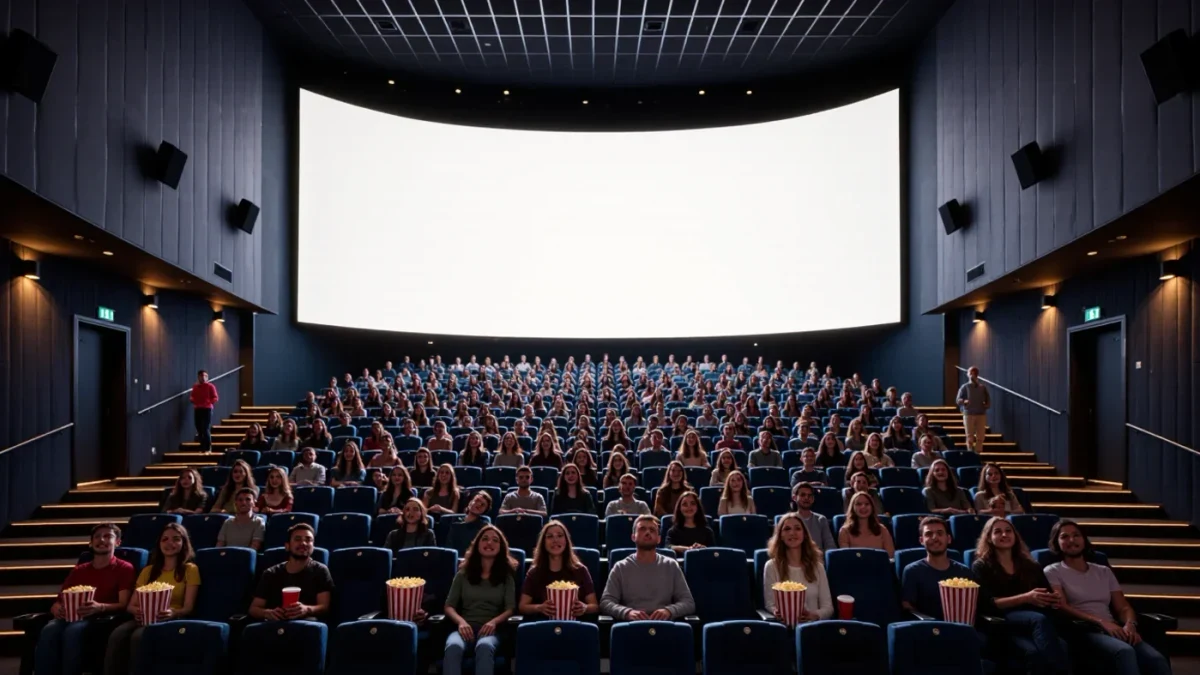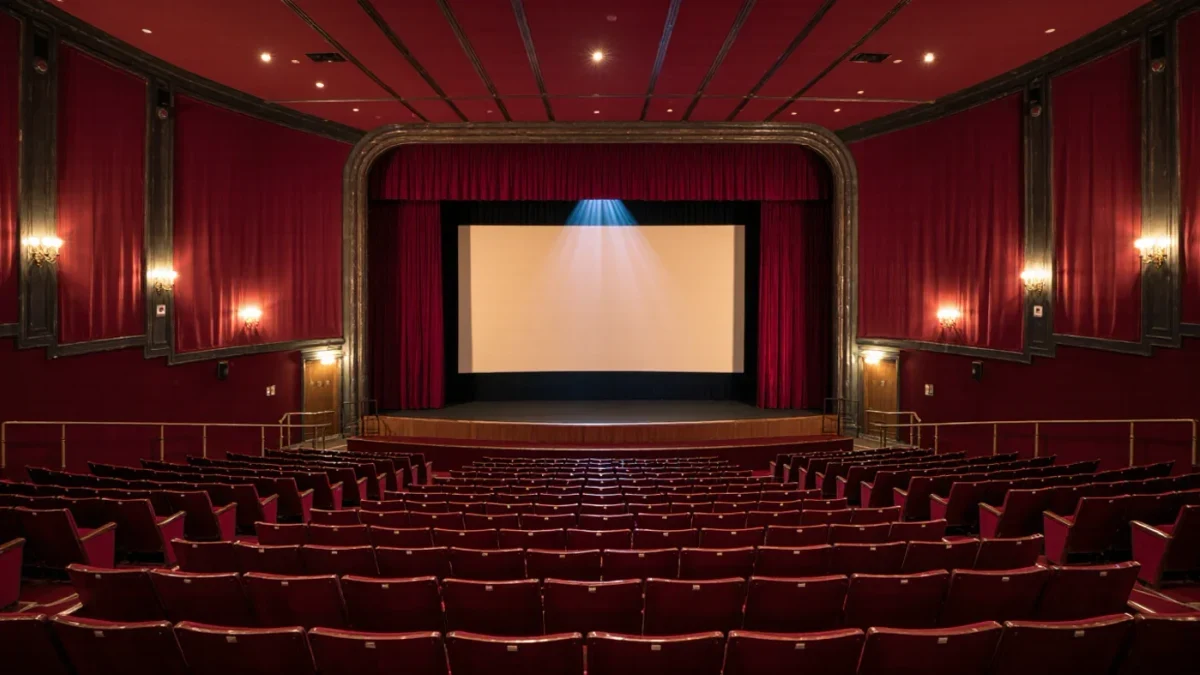
Dolby Atmos, introduced in 2012 with Pixar's Brave, replaced the channel-based soundtrack with object-based audio: instead of mixing sounds into fixed speaker feeds, engineers tag each sound with positional metadata, and the cinema processor renders it to whatever speakers the room actually has. The ceiling gained speakers, and sound gained the ability to move around the audience as a discrete element rather than a pan between left and right walls.
What was wrong with channel-based sound?
Traditional cinema sound, from stereo through 5.1 and 7.1, is built on channels: a fixed number of speaker feeds, mixed in post and reproduced identically in every theater. The format was remarkably durable — 5.1 dates to the early 90s — but it had hard limits. Sounds could only be placed where channels existed, and overhead placement was essentially impossible because nobody installed ceiling speakers for a format that didn't address them. A helicopter circling the audience was an illusion stitched from level changes, not an actual trajectory.
Channel-based formats also encoded the mix to the room. A 7.1 mix in a 5.1 theater lost information. Atmos inverts the dependency: the mix travels as audio objects plus a bed, and the renderer adapts it to the specific speaker layout at playback time. screen coverage.
How does object-based audio work in practice?
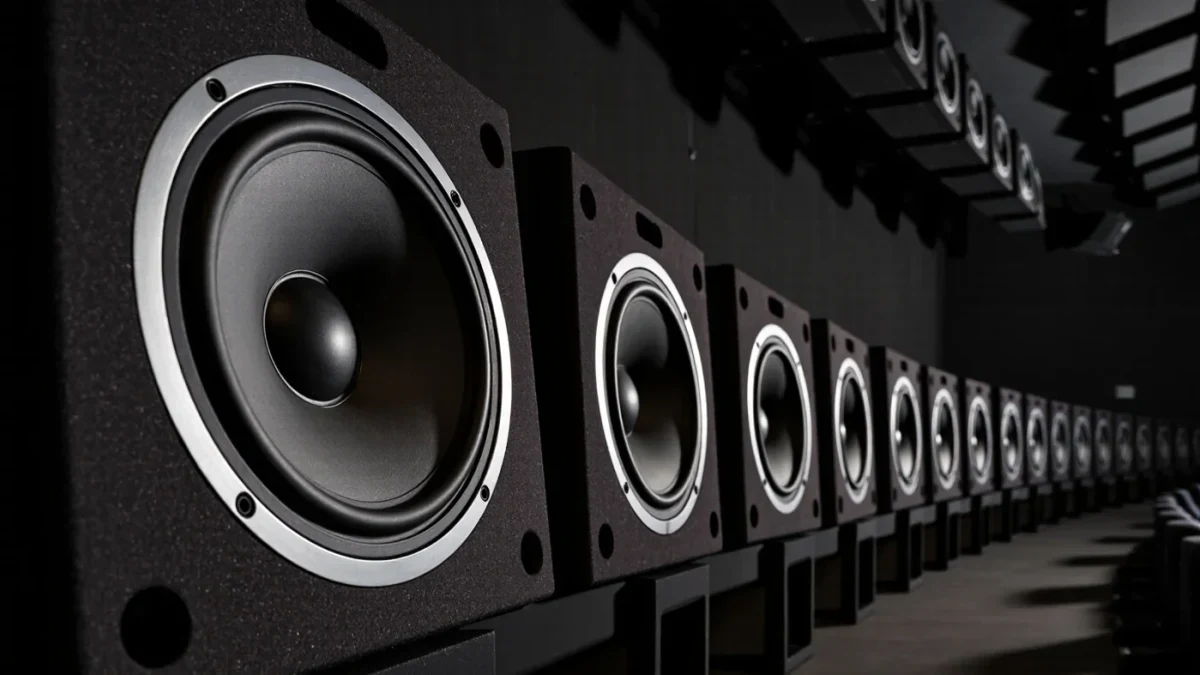
In an Atmos mix, a sound — a voice, a falling object, a rain texture — is authored as an object carrying its audio plus positional coordinates that can change frame by frame. The cinema processor, knowing the exact locations of the room's speakers, calculates in real time which combination of drivers reproduces that trajectory most faithfully. Rooms can scale from modest layouts to flagship installations with dozens of speakers, including arrays filling the plane between the screen and the ceiling. The format supports well over a hundred simultaneous audio elements, far beyond what channel formats could address.
Not everything is an object. Ambience — room tone, reverberant beds — still travels as channel beds. Mixers make the object-versus-bed decision per sound, and the craft shows: the best Atmos tracks use movement sparingly, for moments where space itself carries meaning.
What does Atmos change for the audience?
Three audible differences dominate. First, height: rain, aircraft and cavernous interiors acquire a vertical dimension that channel formats faked. Second, localization: a discrete sound has a point in space rather than a smear across a wall of speakers. Third, headroom and clarity — Atmos rooms are installed to Dolby's speaker specification, which mandates coverage, so dialogue intelligibility tends to be more consistent than in older auditoriums tuned by ear.
The home version works on the same principle, scaled down: soundbars with upfiring drivers and ceiling-bounced audio, or height speakers in dedicated rooms, reproduce the object metadata within the layout's limits. It is the same intellectual property under two very different physical ceilings.
Which films use Atmos well?
Titles frequently cited for disciplined Atmos work include Gravity, whose orbital debris moves with violent precision; Mad Max: Fury Road, a sustained demonstration of moving vehicles as positional objects; and 1917, where the sound design follows the continuous camera through trenches and ruins. The common thread is restraint — placement serves the scene rather than announcing the format.
Is Atmos worth choosing a theater for?
If the choice is between a standard 7.1 house and a properly installed Atmos room for the same title, the Atmos room is the better listening experience on the merits: clearer dialogue, real vertical imaging, and a mix authored for the space. But installation quality varies, and a well-tuned conventional theater can beat a careless Atmos retrofit. The format defines capability; the room determines delivery.
How is an Atmos mix actually built?
The mixing stage mirrors the theater. A dubbing stage configured for Atmos carries the same speaker layout the auditorium will use — screen channels, surround walls, overhead arrays — and mixers position objects on a three-dimensional grid using the console's panning tools. Because the renderer solves for the destination room, the mix made on the stage translates to smaller layouts without a separate pass. Under the old channel regime, each speaker configuration demanded its own downmix, and quality leaked at every step.
The workflow change also altered creative decisions. Dialogue, historically anchored to the center channel, can now move — a voice calling from off-screen carries its true position. Mixers describe the discipline as spending movement where it earns meaning: a two-hour film that constantly swirls sound exhausts the audience, while one precise overhead event lands harder than fifty.
What came before Atmos?
Cinema sound has always been a format race. Warner's Don Juan synchronized discs in 1927; Fantasia experimented with multichannel stereo in 1940; magnetic stripe brought multitrack to the 50s roadshow era. Dolby itself entered in the 1970s with noise reduction, then digital 5.1 with Batman Returns in 1992. Each step widened the palette, but all of them — including 7.1 and 11.1 variants — stayed channel-based. Atmos broke that lineage by making the room the variable and the mix the constant.
Why does Atmos matter beyond the theater?
The home and mobile ecosystems licensed the same object model, which means streaming services, soundbars, phones and cars now reproduce the positional metadata within their capabilities. That reach is why Atmos became a default for major releases rather than a specialty format: one mix serves every endpoint, scaled by the renderer. The strategic point for the industry is format lock-in — productions authored once in Atmos travel everywhere Dolby has a footprint, the same leverage channel formats never had.
What about competing object formats?
Atmos is not alone. DTS:X arrived in 2015 with a similar object-based model and a looser speaker requirement, and Germany's Auro-3D proposed a channel-plus-height layer instead of full object rendering. All three solved the ceiling problem; none matched Atmos's installation base or its licensing reach into consumer devices, and exhibitor uptake followed the content. Format wars in sound are decided by dubbing stages, and the stages standardized on Atmos.