The character actor's forty-year career is built on a proposition the industry never prints on a poster: reliability compounds. While leads are chosen for bankability and discarded when it fades, character actors are chosen for usefulness, and usefulness does not age out. The performers who work continuously from their twenties into their seventies share a recognizable toolkit: range, technical speed, physical distinctiveness worn as an asset, and a reputation among casting directors as the easiest hire on the call sheet.
What exactly is a character actor?
The term covers performers who specialize in distinctive, specific people rather than romantic or heroic leads: the friend, the villain, the boss, the oddball, the professional whose face you know and name you look up. The industry distinction is partly structural. Leads carry a film's commercial risk; character actors carry scenes. That division of labor creates a different kind of value, because every film needs scene-carriers, in multiples, while it needs only one or two leads.
The result is a deeper market. At any moment there are a handful of lead roles being cast and hundreds of supporting ones, across film, television, streaming, commercials and voice work. Character actors live across all of them simultaneously, and the portfolio is what makes the career durable.
Why does reliability matter more than brilliance?
Because production economics punish risk. A set day costs enormous money, and an actor who arrives off-book, hits marks, adjusts direction quickly and delivers consistent takes between coverage saves the production real hours. Casting directors and first assistant directors maintain informal mental lists of actors who are fast and low-drama, and those lists drive decades of employment. Brilliance with difficulty gets an actor hired twice; competence with ease gets them hired forever.
Reliability also compounds through directors. Filmmakers reuse actors they trust, which is why character actors' filmographies often show clusters around particular directors' bodies of work. A single good experience can mean five films over fifteen years, and the relationship outlasts any single role's fame.
How does range function in this career?
Range, for a character actor, means castable specificity across types. The working performer can play the corrupt official and the grieving father in the same season, and the transition is invisible because the persona is not the product, the performance is. This is the opposite of lead-branded acting, where the persona is the product and deviation confuses the market.
Physical type is the twist. Character actors often have distinctive looks, and the smart ones stop fighting type and monetize it. The actor who always plays authority figures, or villains, or unsettling strangers, becomes the first call for that slot nationally. Type casting, resented early, is revealed by mid-career as a booking engine.
What does the workload actually look like?
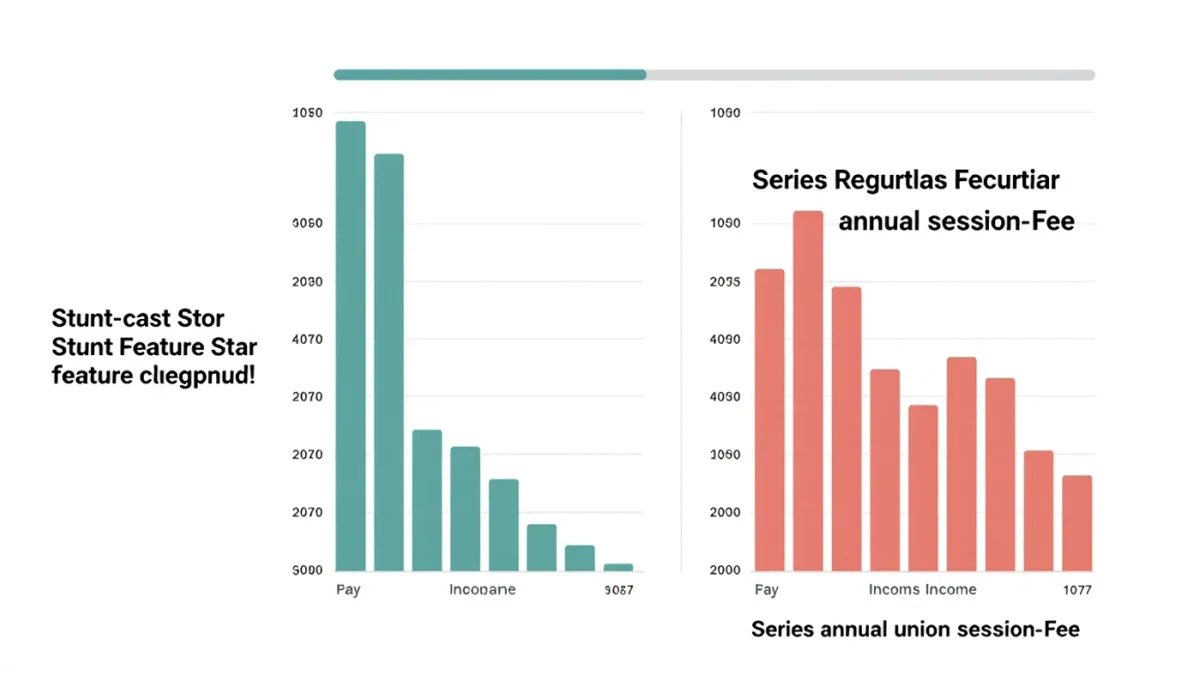
Busy character actors string together a volume of credits that staggers lead-actor observers: several guest spots a year, recurring television roles, a feature or two, a commercial campaign, maybe a voice role. Union scale day rates and guest-star quotes are the unit economics, with residual streams from reruns, streaming and advertising carryover smoothing the gaps.
The gap management is the hidden skill. Work is lumpy, and a forty-year career is really the management of dry spells: taking the theater job that re-energizes craft, doing the commercial that pays eight months of rent, saying yes to the small role in a director's first feature that pays off a decade later. The actors who survive are the ones who treat the career as a portfolio, not a ladder.
How has streaming changed the character actor's market?
Positively and dramatically. The volume era of scripted series multiplied the number of recurring and guest roles many times over, and prestige television became the character actor's prestige arena, offering parts with depth that mid-budget film once provided. Long-format series work lets distinctive performers build fan followings one memorable recurring role at a time, something the theatrical mid-budget collapse had made nearly impossible.
International production added another layer. Local-language originals and globally shot series employ character actors across every market, and the craft travels: a great screen performance needs no translation in the casting room.
What can be learned from the longest careers?
The filmographies of the genre's greats read like a history of the industry itself: silent-era faces through studio-system contracts, westerns, television anthologies, seventies New Hollywood, cable dramas, streaming. The adaptors survived each platform shift by treating the craft as constant and the delivery mechanism as incidental. The common threads are visible: they said yes more often than no, they were good to crews, they kept their instruments, voice and body, maintained, and they never priced themselves out of the small job that kept the muscle warm.
That last point is the quiet engine of it all. Forty-year character careers are not built on the big break; they are built on never becoming too expensive or too famous to hire. In a business that pays fortunes for novelty and then discards it, the character actor's strategy of permanent usefulness is the closest thing Hollywood has to a pension plan.
What role does training play in the long career?
More than in lead careers, because the character actor is hired for capability on demand. Theater backgrounds remain the standard foundation: stage training builds the voice projection, textual speed and physical control that let a performer walk onto a set and deliver usable takes in the first hour. Many of the longest-working character actors carry decades of theater credits alongside screen work, returning to the stage periodically the way athletes cross-train.
Continuing training also functions as networking. The working actor's class is where casting directors send callbacks, where younger performers meet the veterans who later recommend them, and where craft stays sharp during the inevitable slow quarters. In a career measured in decades, the classroom is less a launching pad than a maintenance facility, and the actors who treat it that way are the ones still booking at seventy.