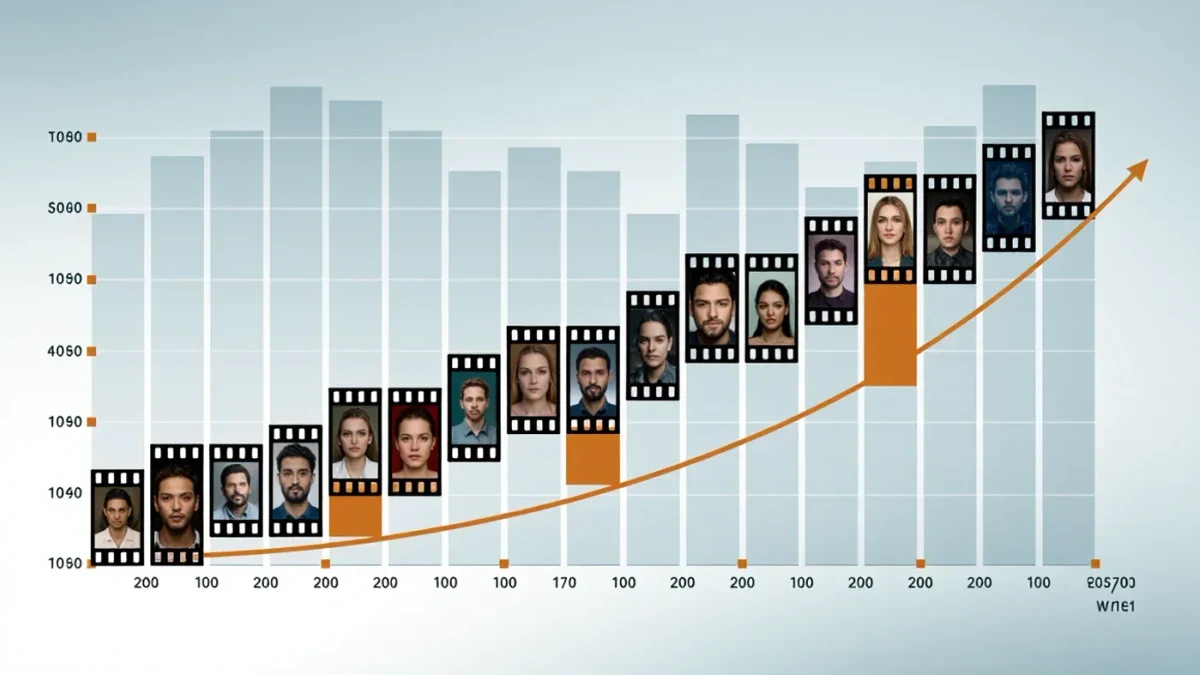
Hollywood's classical average shot length ran long enough that a viewer could map a cut; contemporary action films routinely cut every two seconds or faster, and some sequences average under one. The shift is measurable in the scholarly record — average shot lengths have fallen fairly steadily since the 1960s — and contested in every edit suite. Pace is not speed. It is the rhythm of attention a film imposes, and editing is where that rhythm is manufactured.
What does cutting faster actually do?
Short shots compress information density and deny the eye rest. The physiological effect is arousal — cuts function as orienting stimuli — which action filmmaking exploits to make staged events feel bigger than their choreography. The cost is legibility: geography, continuity of motion and cause-and-effect all become harder to hold. Fast cutting can obscure that a stunt is unimpressive, or it can synthesize impact a wide master shot would dissipate. Same tool, opposite honesty.
The craft distinction is coverage versus design. Coverage-cutting assembles cover footage after the fact and lets rhythm find itself. Designed cutting blocks sequences shot-by-shot for a specific tempo, the method behind the most praised action editing of the last decades — Mad Max: Fury Road reportedly contains on the order of 2,700 cuts across two hours, yet its chases read clearly because each cut continues a legible line of action.
Why did movies speed up?
Multiple pressures converged. Television raised the ambient cutting rate audiences accepted; music videos and commercials in the 1980s trained a generation of editors and viewers on second-long rhythms. Steadicam and later digital cameras made coverage cheaper to shoot, and digital editing made experimentation nearly free — an editor can try a hundred cut points in the time splicing film allowed for three. Home viewing compressed attention further: films now compete with a second screen in the lap.
There is also an economic logic. Faster cutting can manufacture intensity without stunt spend, and international releases favor rhythm over dialogue-dependent tension. None of this was a decision anyone made centrally. The average simply drifted, and the drift has a slope.
Is fast editing worse?
The honest answer is conditional. Critics' shorthand — that modern editing is incoherent — dissolves under the counterexamples: Fury Road, the John Wick films with their long-take fight grammar, Baby Driver cutting to music with frame accuracy. Incoherence is a failure of craft, not a property of tempo. Conversely, slow cutting is not automatically rigorous; a languid film can simply be slack. What distinguishes controlled pace is whether each cut answers a question — new information, new emphasis, new geometry — or merely escapes a shot the filmmaker could not sustain.
What happened to the long take?
It became a showcase category. Digital stabilization and stitching let directors build sequences that read as single takes across impossible transitions — Birdman (2014) plays as one continuous shot through sleight of edit; 1917 (2019) built a war film on the same conceit; the corridor fights of Oldboy and the Copacabana tracking shot in Goodfellas are the lineage. The long take now functions as visible craft display precisely because cutting became the norm: duration is the special effect.
Its risk is the same as any display — self-consciousness. A oner earns its length when real-time continuity is the point: a walk through a club establishes a whole social world; a trench run makes war's duration physical. When the camera shows off instead, audiences feel the effort and stop believing the fiction.
Can pace be measured objectively?
Yes, crudely. Cinemetrics-style shot-length analysis — counting cuts and averaging shot durations — has produced a real scholarly literature, and its broad finding is consistent: classical Hollywood averaged shots measured in many seconds; post-1960 averages declined steeply; twenty-first-century action cinema operates at the low end. The measurement tells you tempo, not quality. Two films with identical average shot lengths can differ entirely in rhythm, because pace lives in the pattern — alternation, acceleration, restraint — not the mean.
What should a viewer watch for?
Ask why each cut happens. In the strongest editing, cuts track attention: the eye is already moving to the next subject before the film arrives there. In the weakest, cuts spray — fragmenting action until the brain reconstructs events from implication. Notice when a film declines to cut; withheld cuts are now as expressive as rapid ones. Pace is the one craft element every audience senses without naming, which is precisely why it rewards naming.
How did digital editing change the craft?
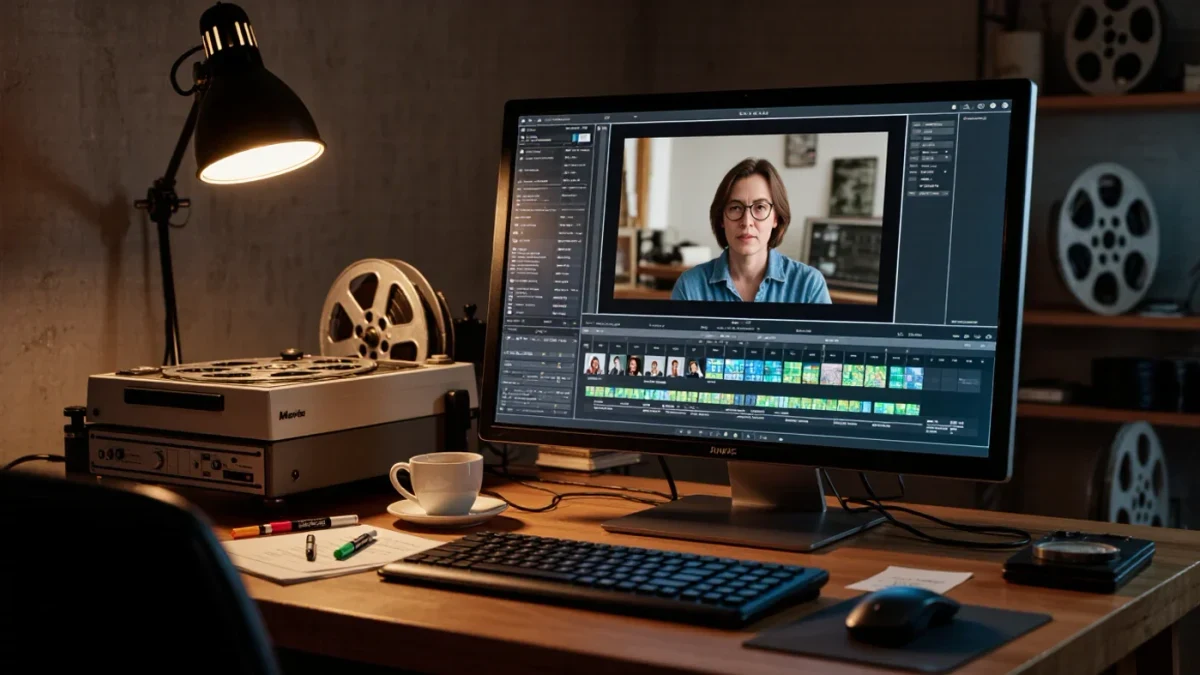
Nonlinear systems replaced physical film assembly in the 1990s, and the consequence was velocity. An editor on a Moviola or flatbed measured a day's work in a few cuts; a digital editor tests variants continuously, and directors sit in on sessions that were once solitary. That fluidity enables both the best and worst of modern pace — precise, music-like cutting on one hand, and infinite-tinkering indecision on the other. The discipline of committing to a cut, once enforced by the medium's tedium, now has to be enforced by the filmmakers.
Digital capture compounded it. Shooting ratios that were once bounded by stock costs became effectively unbounded, which flooded the edit with options and shifted part of the film's authorship into the cutting room. Coverage culture — shoot everything, decide later — is the production-side mirror of fast cutting.
Does the audience's tolerance keep widening?
Up to a physiological limit, yes, and second-screen viewing pushes both ways: films cut faster to compete with the phone, and simultaneously broadcast their plots more redundantly so a distracted viewer can rejoin. The result is a strange bifurcation — maximal-velocity franchise action on one side, and a counter-movement of deliberately slow cinema, from festival auteur work to the long-take showcase, on the other. The middle is thinning. Pace has become a genre declaration.
The split also shows up in awards craft. Editing Oscars have swung between the muscular — war and action montages — and the invisible, and the Academy's editing branch has long been read as the best early predictor of the Best Picture field, because a film that survives a hundred assembly decisions intact is usually built well underneath.
None of that resolves the argument over speed; it only reframes it. Every era's cutting rate felt natural to the audience that grew up on it, and every generation of critics declared the new rate a decline. The durable question is the one the best editors ask of every cut: what does this change, and is that change worth the interruption.